

Anti Drone System in India: AI Technologies, Market Opportunities & Defense Applications
India is rapidly emerging as one of the world’s fastest-growing markets for advanced aerial defense technologies. With rising cross-border drone intrusions, modern warfare threats, and the increasing use of unmanned aerial vehicles (UAVs) for surveillance and attacks, the demand for an advanced Anti Drone System has increased dramatically across defense, homeland security, and critical infrastructure sectors.
The 2021 Jammu Airbase drone attack changed India’s defense strategy permanently. Since then, the country has accelerated investments in indigenous Anti Drone Systems, AI-powered drone detection platforms, laser-based interception technologies, and electronic warfare solutions. Government initiatives like Make in India and Atmanirbhar Bharat are further boosting domestic innovation in the counter-drone ecosystem.
Today, India is not only developing sophisticated military-grade drone defense technologies but is also positioning itself as a future global hub for AI-enabled aerial security systems.
What is an Anti Drone System?
An Anti Drone System is a defense technology designed to detect, identify, track, and neutralize unauthorized or hostile drones. These systems combine multiple technologies such as radar, RF sensors, electro-optical cameras, AI analytics, jammers, GPS spoofers, and directed energy weapons to prevent drones from entering protected airspace.
Modern anti-drone system platforms are capable of:
- Detecting rogue drones in real time
- Tracking drone movement and trajectory
- Identifying drone frequency signatures
- Disrupting communication links
- Neutralizing UAVs using jamming or laser technologies
- Preventing drone-based espionage and attacks
According to the industry report referenced in the uploaded document, anti-drone systems have become essential for protecting the following:
- Military bases
- Airports
- Border regions
- Smart cities
- Public events
- Critical infrastructure
- Industrial facilities
- Government installations
Why India Needs Advanced Anti Drone Systems
India faces unique geopolitical and security challenges that make counter-drone technologies critically important.
Rising Cross-Border Drone Threats
Drone intrusions along India’s borders with Pakistan and China have increased significantly in recent years. Drones are now being used for:
- Smuggling weapons and narcotics
- Border surveillance
- Intelligence gathering
- Delivering explosives
- Conducting aerial attacks
The low operational cost of drones combined with their high destructive potential, has transformed modern warfare. This has forced Indian defense agencies to modernize their air defense capabilities rapidly.
India’s Anti-Drone Market is Growing Rapidly
India’s counter-drone industry is witnessing explosive growth.
According to market estimates:
- India’s anti-drone market size reached approximately USD 65.73 million in 2024
- The market is projected to grow to nearly USD 496.71 million by 2031
- CAGR is estimated at around 33.5%
Several factors are driving this growth:
- Military modernization
- Increased border tensions
- AI-powered warfare
- Smart city security requirements
- Airport security concerns
- Government support for indigenous defense manufacturing
- Growth of drone technology itself
The Indian government’s emphasis on domestic defense production under Make in India and Atmanirbhar Bharat is further accelerating investments in the anti drone defense system sector.
AI Technologies Powering Modern Anti Drone Systems
Artificial Intelligence is becoming the core engine behind next-generation drone defense technologies.
Modern Anti Drone Systems no longer rely only on manual radar monitoring. Instead, they use AI algorithms to automate threat detection, classification, and response.
AI-Based Threat Detection
AI-powered platforms can:
- Analyze drone flight patterns
- Differentiate between birds and drones
- Detect swarm attacks
- Predict drone movement
- Identify suspicious behavior automatically
Machine learning algorithms continuously improve threat accuracy by analyzing massive volumes of radar and RF data.
Sensor Fusion Technology
The best anti drone systems use sensor fusion technology that integrates:
- Radar systems
- RF detectors
- Thermal cameras
- Optical sensors
- Acoustic sensors
- AI analytics software
This creates a multi-layered air defense system capable of detecting even small low-flying drones.
AI-Driven Autonomous Response
Advanced Anti Drone Systems can automatically:
- Trigger alarms
- Activate jammers
- Lock laser weapons onto targets
- Track multiple drones simultaneously
- Coordinate with air defense networks
This reduces human response time and significantly improves battlefield efficiency.
Types of Anti Drone Systems
Modern anti drone defense system technologies are generally divided into two major categories.
Soft-Kill Systems
Soft-kill systems disable drones without physically destroying them.
These include:
- RF jamming
- GPS spoofing
- Communication signal disruption
- Navigation interference
Soft-kill solutions are widely used because they minimize collateral damage.
Hard-Kill Systems
Hard-kill systems physically destroy hostile drones.
These include:
- Laser weapons
- Missiles
- Kinetic projectiles
- High-energy microwave systems
Hard-kill technologies are primarily deployed in military environments where rapid neutralization is critical.
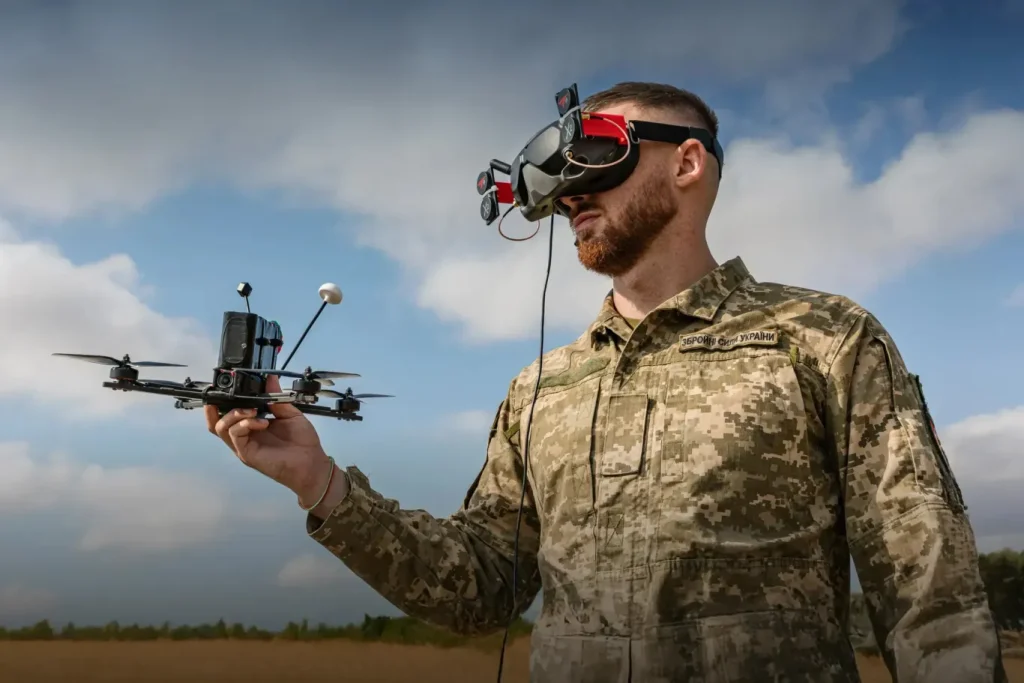
Directed Energy Weapons: India’s Next-Generation Defense Technology
One of the most important developments in India’s drone defense ecosystem is the advancement of Directed Energy Weapons (DEWs).
The Defence Research and Development Organisation (DRDO) has made significant progress in developing laser-based anti-drone systems.
DRDO’s Laser-Based Anti Drone System
India successfully demonstrated the:
- Mk-II(A) Laser Directed Energy Weapon
- Laser interception technology capable of neutralizing drones
- Precision aerial threat elimination systems
The system can:
- Destroy drone sensors
- Burn through drone structures
- Neutralize UAVs within seconds
- Handle swarm drone attacks
This places India among a small group of countries possessing advanced laser defense capabilities.
Why Directed Energy Weapons Matter
Directed energy systems offer major advantages:
- Extremely fast response time
- Low cost per engagement
- Precision targeting
- Reduced ammunition dependency
- Effective against drone swarms
Because of these benefits, directed energy weapons are expected to dominate future Anti Drone Systems development globally.
Role of AI in Drone Swarm Defense
Drone swarm warfare is one of the biggest emerging threats in modern military operations.
Traditional air defense systems struggle to handle:
- Multiple drones attacking simultaneously
- Autonomous drone formations
- Coordinated aerial attacks
AI-based systems solve this challenge through:
- Real-time target prioritization
- Automated engagement decisions
- Simultaneous multi-drone tracking
- Predictive interception algorithms
India is actively investing in AI-powered swarm defense solutions for future battlefield readiness.
Indigenous Innovation Driving India’s Anti Drone Industry
India is rapidly shifting from defense importer to defense innovator.
Several Indian companies are now developing globally competitive anti-drone system technologies.
Key Indian Players
Major companies include:
- DRDO
- Bharat Electronics Limited (BEL)
- Adani Defence & Aerospace
- Zen Technologies
- Paras Defence
- Tonbo Imaging
- IdeaForge
- IG Drones
- L&T Defence
- Big Bang Boom Solutions
AI-Powered Indrajaal System
One of the most advanced Indian developments is the AI-powered Indrajaal platform.
The system:
- Protects large airspace zones
- Uses AI-driven threat analysis
- Integrates sensors, jammers, and spoofers
- Supports critical infrastructure security
According to recent developments, the platform can reportedly protect up to 4,000 square kilometers of airspace.
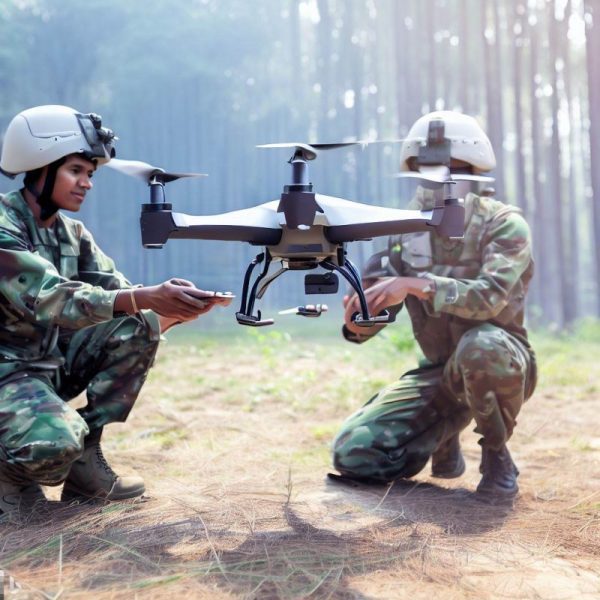
Defense Applications of Anti Drone Systems
The Indian armed forces are currently the largest users of Anti Drone Systems.
Border Security
Anti-drone systems are heavily deployed across:
- Line of Control (LoC)
- Northern border regions
- High-risk infiltration zones
Vehicle-mounted and portable systems are increasingly used for tactical military operations.
Military Base Protection
Military installations require continuous drone surveillance monitoring.
Counter-drone systems help secure:
- Airbases
- Ammunition depots
- Radar stations
- Strategic command centers
The Indian Army has already deployed Integrated Drone Detection and Interdiction Systems (IDD&IS) along sensitive northern borders.
Airport Security
Unauthorized drones pose major threats to airports.
Drone intrusions can:
- Disrupt air traffic
- Threaten passenger safety
- Cause flight delays
- Enable surveillance operations
Modern Anti Drone Systems are now being deployed globally for airport airspace protection.
Smart Cities and Critical Infrastructure Protection
The future of India’s anti-drone market extends far beyond military applications.
Smart City Airspace Security
As Indian cities adopt smart surveillance infrastructure, drone monitoring is becoming essential.
Potential applications include:
- Urban airspace monitoring
- Public event protection
- VIP security
- Traffic surveillance
- Industrial monitoring
Industrial Infrastructure Protection
Critical industries increasingly require drone defense systems.
These include:
- Oil & gas facilities
- Nuclear plants
- Refineries
- Power grids
- Ports
- Data centers
AI-driven counter-UAS platforms are expected to become standard infrastructure security tools in the coming years.
Anti Drone Systems in Public Event Security
India has already begun deploying anti-drone technologies during large public gatherings.
A major example is:
- Odisha Police planning anti-drone deployment during the Puri Rath Yatra to prevent unauthorized drone activity.
This highlights the growing civilian and homeland security demand for advanced aerial protection systems.
Challenges Facing India’s Anti Drone Industry
Despite rapid progress, the sector still faces several challenges.
High Cost of Advanced Systems
Sophisticated anti-drone platforms require expensive:
- AI software
- Radar systems
- Laser technologies
- Integrated defense networks
This limits large-scale deployment, especially in remote areas.
Dependence on Imported Components
India still imports many critical components such as:
- Sensors
- Semiconductor chips
- Advanced optics
- RF modules
Reducing import dependency remains a major industry objective.
Rapidly Evolving Drone Threats
Drone technology evolves extremely fast.
Modern threats include:
- Autonomous drones
- Stealth UAVs
- AI-powered drone swarms
- Frequency-hopping drones
Anti-drone systems must continuously evolve to remain effective.
Market Opportunities for the Future
India’s anti-drone ecosystem offers massive long-term opportunities.
Export Potential
Indian systems are becoming globally competitive because they are:
- Cost-effective
- Modular
- AI-driven
- Battlefield tested
This creates export opportunities for Indian defense manufacturers.
Startup Ecosystem Growth
India’s drone and counter-drone startup ecosystem is growing rapidly.
Investments are increasing in:
- AI-based aerial analytics
- Autonomous surveillance
- Electronic warfare
- Directed energy weapons
- Drone interception systems
Government Support
Government-backed initiatives continue to accelerate the industry:
- Make in India
- Defence Innovation Organization
- iDEX programs
- Defence Procurement Procedure
- Atmanirbhar Bharat
These initiatives are strengthening India’s domestic defense manufacturing ecosystem.
What Makes the Best Anti Drone System?
The best anti drone system combines multiple layers of defense rather than relying on a single technology.
Key characteristics include:
- AI-powered threat detection
- Multi-sensor fusion
- Real-time analytics
- Autonomous response
- Soft-kill and hard-kill integration
- Long-range detection
- Swarm defense capability
- Low false alarm rate
Modern systems must also be scalable, mobile, and capable of integration with broader defense networks.
Future of Anti Drone Systems in India
India is entering a new era of AI-powered aerial defense.
Future developments will likely include:
- Autonomous counter-drone networks
- High-energy microwave weapons
- Advanced laser interception systems
- Space-based drone tracking
- AI battlefield integration
- Fully automated air defense grids
As drone warfare evolves, anti-drone technologies will become one of the most critical pillars of national security.
India’s rapid progress in indigenous innovation, AI integration, and defense modernization positions the country as a future global leader in the Anti Drone Systems industry.
Conclusion
The growing threat of drone warfare has transformed national security priorities across the world, and India is responding aggressively through advanced technological innovation.
From AI-powered drone detection to laser-based directed energy weapons, the country is building a strong ecosystem around modern Anti Drone System technologies. Government initiatives, rising defense investments, startup innovation, and increasing geopolitical tensions are all driving the rapid expansion of the industry.
As India strengthens its position in military modernization and smart security infrastructure, the demand for advanced Anti Drone Systems will continue to rise across defense, homeland security, critical infrastructure, airports, smart cities, and industrial sectors.
The future of aerial defense will be defined by AI, automation, and integrated electronic warfare — and India is rapidly becoming one of the key players shaping that future.
FAQ
Why are Anti Drone Systems important in India?
India faces increasing drone threats along borders, military zones, airports, and public infrastructure, making anti-drone defense essential for national security.
How does AI help Anti Drone Systems?
AI improves drone detection accuracy, automates threat analysis, enables swarm defense, and reduces response time through real-time decision-making.
What are directed energy weapons in anti-drone defense?
Directed energy weapons use high-powered lasers or microwave energy to destroy or disable drones quickly and precisely.