
How Anti Drone Systems in India Are Protecting Airports, Borders & Smart Cities
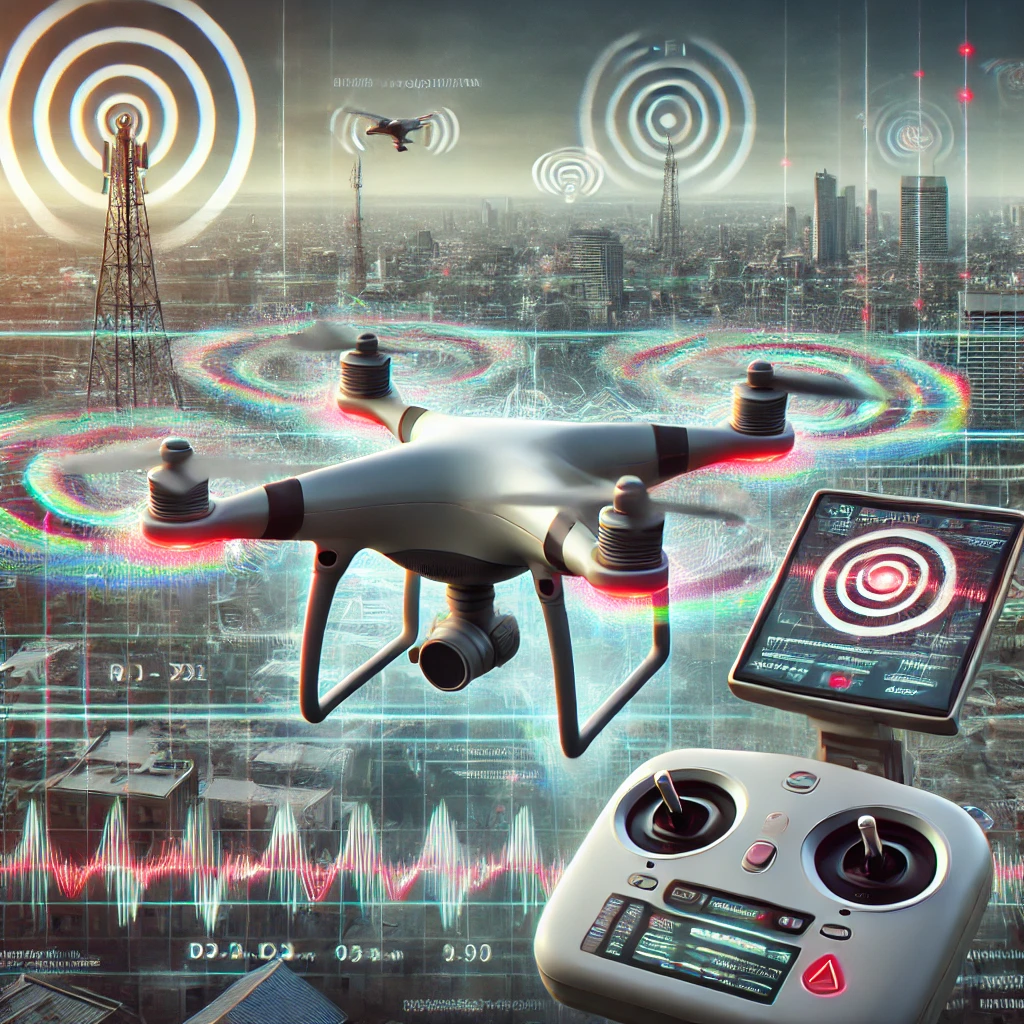
In recent years, the skies above India have seen a new kind of threat: small unmanned aerial vehicles (drones) and unmanned aircraft systems (UAS) being used for surveillance, smuggling, sabotage or even weaponised attacks. To meet these threats, India is increasingly turning to anti-drone systems — i.e., systems that detect, track, identify, and neutralise unauthorised drones. This article explores Anti Drone Systems in India, explains how they work, and shows how they are protecting our airports, borders and smart cities.
Why India Needs Anti Drone Technology
India’s geography, infrastructure and security profile make it vulnerable to drone threats. Some key factors:
- India has long international land borders, especially with Pakistan and China, and drones are being used for smuggling of weapons and drugs across these borders. For example, in Punjab 283 drones loaded with heroin, weapons and ammunition were seized in 2024. The Times of India+1
- India has important infrastructure (airports, power plants, government buildings) which could be targeted. As one article says: “Border security … drones have been increasingly used for cross-border smuggling and reconnaissance. … Critical infrastructure: Airports, power plants, and government buildings need protection from unauthorized UAV access.” Kotai Electronics Pvt. Ltd.+1
- Drones are becoming smaller, cheaper, harder to detect, and can be weaponised or used in swarms — so conventional defences are inadequate. MP-IDSA
- The rising adoption of drones in civilian airspace (for delivery, surveillance etc) means separation of legitimate vs illegitimate drone use is a safety challenge for smart cities.
- India is also pushing for “Atmanirbhar Bharat” (self-reliant India) in defence, so many indigenous anti drone technologies are being developed. www.ndtv.com+1
Thus, for airports, borders and smart cities, having an efficient anti drone system is no longer optional; it is essential.
What is an Anti-Drone System & How Does It Work?
Before looking at the applications in airports, borders and smart cities, let’s understand what we mean by anti-drone system or anti-drone technology and how it works in simpler terms.
Basic Layers of an Anti Drone System
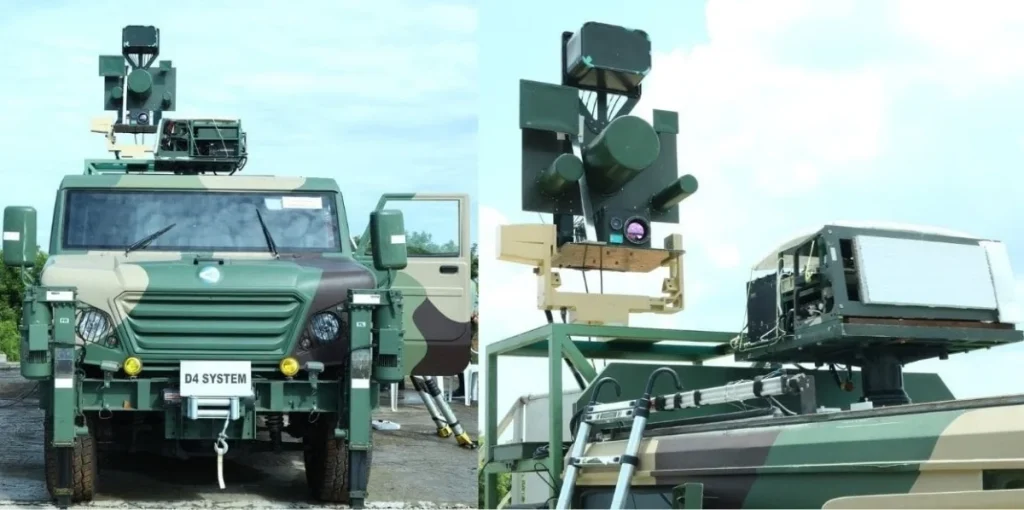
According to Indian sources, a modern anti drone system has several layers: detection, identification/classification, and neutralisation.
- Detection: Using radar (for long range), RF sensors (to catch drone communication), acoustic sensors (sound of the drone), electro-optical/infrared (EO/IR) cameras to visually or thermally spot drones.
- Identification / Classification: Once the drone is spotted, the system uses AI/ML techniques, signature libraries to understand what kind of drone it is, whether it is friend or foe, and its threat level.
- Neutralisation / Mitigation: After detection and classification, the system acts. Typical methods:
- RF jamming: disrupts link between the drone and the controller
- GNSS spoofing: send wrong GPS signals to the drone
- Hard-kill: laser, micro-missiles, nets, to physically disable or capture the drone.
Indian Specific Technologies
India is developing indigenous anti drone technology to suit its needs. Some examples:
- A Hyderabad-based firm unveiled an AI-powered autonomous anti drone system that can protect entire cities or critical infrastructure.
- India’s Bhargavastra system: a home-grown “hard kill” counter-drone system using micro-missiles and micro-rockets to neutralise drone swarms. Hammer Mindset+1
- The Border Security Force (BSF) and other forces are inducting anti drone/counter-UAS systems along borders. Cuashub+1
- Also the Indian army/air force will acquire systems that can engage drones at 2 km using lasers. The Times of India
Why This Matters for Smart Cities & Infrastructure
In smart cities, there are airports, government buildings, event venues, power plants, bridges, and other critical infrastructure that must remain safe from drone threats. Integrating anti drone systems means: continuous surveillance of the airspace, automated alerts when unauthorized drones fly, and timely neutralisation to prevent damage or disruption.
An anti drone system basically becomes part of the broader security infrastructure of a smart city.
Protecting Borders
Let’s now see how Anti Drone Systems in India are being used for border protection.
Smuggling & Reconnaissance Across Borders
On India’s borders (especially the India-Pakistan border), drones are being used to smuggle narcotics, weapons, ammunition and reconnaissance material. For example, in Punjab, a few months ago, nine anti-drone units were announced along the international border costing Rs 51.4 crore. These units aim to detect drone launches from across the border and neutralise them. The Times of India
The report states: “The system is equipped to accurately detect the drone’s position and its ground control stations… automated alert technology… immediately notifies authorities upon detecting drone movement.” The Times of India
Also, the BSF is deploying indigenous counter-UAS systems along the western border in the near future. Cuashub
Achievements & Impact
According to a government statement, the BSF, using the indigenous anti-drone gun (laser-equipped), achieved a drone neutralisation rate rising from 3% to 55% along the India-Pakistan border in Punjab. www.ndtv.com
This shows that anti drone systems are starting to make a measurable difference in border security.
Why It Matters
- By preventing drone-based smuggling of weapons and drugs, the security forces plug a major loophole.
- By detecting drones early, the border forces can prevent reconnaissance of sensitive installations and troop deployments.
- By integrating anti drone systems with other border sensors and C4ISR (command-control-communications-computers-intelligence-surveillance-reconnaissance) systems, India’s border defence posture becomes more layered and resilient.
- For remote border posts where manpower is limited, automated anti drone systems relieve pressure on human patrols.
Thus, in the border context, anti drone technology is becoming a force multiplier.
Safeguarding Airports & Critical Infrastructure
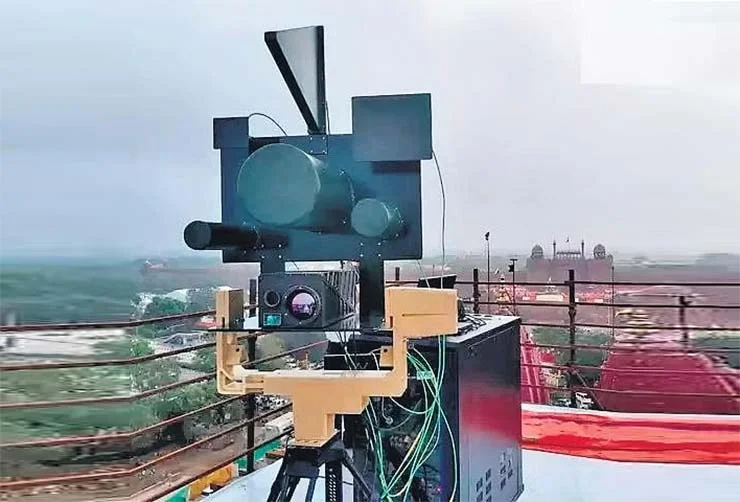
While borders are one front, another equally important front is airports, power plants, refineries, ports and other infrastructure. Here, the risk is not only from smuggling or reconnaissance but also from potential sabotage or terrorist drones.
Airport & Infrastructure Threats
An article focused on India notes that “Critical Infrastructure: Airports, power plants, and government buildings need protection from unauthorised UAV access.”
Also, a Hyderabad-based firm’s system is designed to protect wide areas including airports, refineries, power grid and ports. www.ndtv.com+1
Deployment Examples
- The system from the Hyderabad firm claims to cover up to 4,000 sq km per unit — wide-area protection. PrivateCircle Blog
- India’s Army and Air Force are set to acquire indigenous detection/interdiction systems capable of laser-engagement of drones at 2 km range. The Times of India
What This Means for Airports & Smart Cities
- Airports: Drones flying unauthorised over runways or terminals can cause disruption, pose collision risk or even deliver harmful payloads. Anti drone systems provide air-space vigilance.
- Smart Cities / Critical Infrastructure: In a smart city, many systems (traffic, power, communication) are interconnected. If drones compromise them, the impact can be large. Anti drone systems become part of the smart city security backbone.
- Event Security: Airports often host VIP movements, sensitive cargo, and international visitors — drone threats here could be serious. Anti-drone systems help manage this risk.
- Integration: Anti drone systems can be linked with other city systems (CCTV, radars, city surveillance) so alerts from drone detection feed into city command centres. This is particularly relevant in smart city frameworks.
A Success Story
The rise of indigenously developed anti drone systems in India means we are no longer fully reliant on foreign tech. For example, the gun-mounted anti drone system along the Punjab border mentioned earlier is a laser system developed in India.
Hence, airports and infrastructure are benefiting from home-grown solutions, which tend to be lower cost, customised, and supported locally.
Securing Smart Cities with Anti Drone Systems
Smart cities are emerging across India with digitised infrastructure, IoT sensors, connected public services and large gathering places. These create both opportunities and risks, one of which is drone threats. Let’s look at how anti drone systems play a role.
What Makes Smart Cities Vulnerable?
- High‐density population, many access points, many public events. A rogue drone can cause panic, drop payloads, spy on citizens or infrastructure.
- Infrastructure links: power, transport, and communications are interlinked. A drone threat in one part can cascade.
- Large open spaces: city airports, stadiums, and rooftops offer launching zones for drones.
- Need for real‐time monitoring: Smart city governance depends on real‐time data; drone threats require the same real-time detection and response.
Role of Anti Drone Technology
- For smart city airspace management, Anti drone systems can monitor urban air corridors and flag unauthorised drone activity.
- For VIP or event security: In a smart city scenario, large public events (marathons, rallies, cultural festivals) can be vulnerable. Anti-drone systems help balloon off potential threats.
- Integration into city command centres: Drone alerts can feed smart city dashboards, enabling rapid response by police, city administration, airports, etc.
- Urban critical infrastructure protection: From power substations, data-centres to water supply plants — anti drone systems guard these against aerial threats.
Example – Indigenous System for Smart Deployment
The AI-powered system from Hyderabad (mentioned earlier) claims to be deployable for urban/smart city applications. This shows that anti-drone systems are not just for military or border use, but urban use too.
Benefits for Smart Cities
- Improved public safety and confidence.
- Reduced risk of disruptive aerial incidents (drone collisions, payload drops, spying).
- Enhanced city resilience: In case of aerial threats, city systems can respond faster.
- Lower dependence on manual monitoring: Automated detection/alert means quicker response, less human burden.
Challenges & The Road Ahead
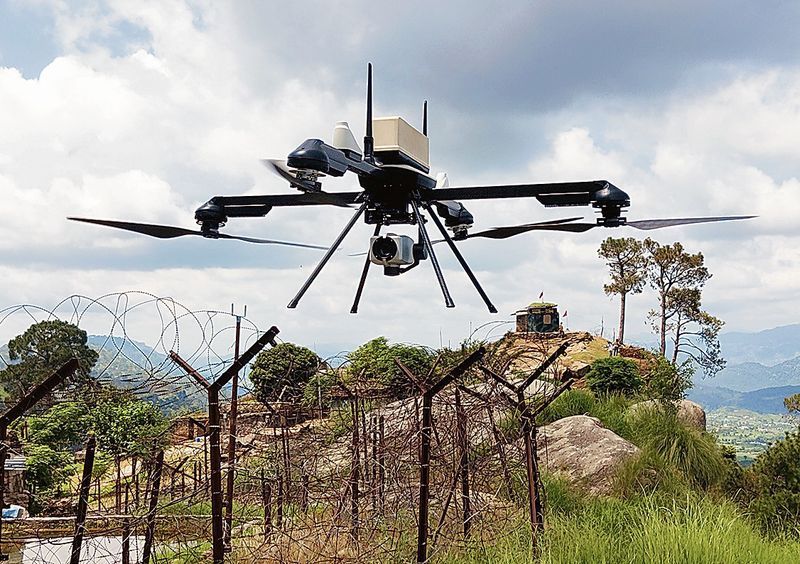
While anti drone systems are increasingly deployed across India, there are some challenges and areas for growth.
Challenges
- Complex urban environments: In smart cities, buildings, rooftops, other drones, birds and clutter create detection challenges. Anti drone systems must differentiate.
- Small drones & swarms: Tiny drones and drone swarms are harder to detect and neutralise. Conventional jamming may be insufficient. As one paper notes: “As drone threats grow in swarms and sophistication, EW-only approaches are no longer sufficient.”
- Cost and coverage: Covering large urban or border zones means many sensors, systems and networked defences, which raise cost and coordination demands.
- Regulation & air-space oversight: For anti-drone systems, especially in civil spaces (smart cities, airports), there must be clear rules about deployment, jamming/spoofing and legal aspects.
- Integration: Ensuring anti-drone technology integrates seamlessly with existing security, surveillance, radar,and law enforcement systems is a non-trivial task.
- Indigenous development & supply chain: While India is pushing for local solutions, scaling up production, maintenance, and upgrades remains a task.
Future Trends for Anti Drone Systems in India
- Wider adoption of AI & autonomous detection: As seen in Indian tech firms, AI-driven anti drone systems are emerging that can monitor, classify and respond with minimal human input.
- Mobile and portable anti-drone units: For border posts, remote sites and smart city events, portable anti drone systems are gaining traction.
- Hard-kill capabilities: Beyond jamming, more systems in India are moving to physical destruction of drones (lasers, micro-missiles) as drone swarms become tougher.
- Integration with C4ISR & command centres: Anti drone systems will increasingly tie into city/defence command-control systems, sharing data and alerts in real time.
- Exports and global partnerships: Indian anti drone technology may find export markets, leveraging cost advantage and innovation.
Key Takeaways for the Indian Audience
- If you live in or around an airport city or smart city project, know that anti drone systems are silently working in the background to protect you from aerial drone threats.
- For defence and security professionals: Understanding “anti drone system” means knowing detection + classification + neutralisation, and seeing how these layers fit into the border or city security fabric.
- For city planners and smart-city projects: Incorporating anti drone technology into city infrastructure means thinking of airspace as part of the urban ecosystem, just like roads, power, and water.
- For policymakers: Leveraging indigenous anti drone technology strengthens our defence and reduces import dependency, while also enabling tailored solutions for India’s unique environments (urban density, remote borders).
- For general citizens: Knowing that these systems exist adds to assurance and trust in infrastructure security.
Conclusion
India is on the move when it comes to drone threats — from smuggling across borders to potential drone intrusion in airports and smart cities. The deployment of Anti Drone Systems in India is playing a key role in safeguarding these critical fronts. From detection radars, AI-powered classification, to jamming and hard-kill systems, the technology is evolving fast to meet the challenge.
In border zones, anti drone systems are helping prevent smuggling and reconnaissance. At airports and infrastructure, they are becoming part of the protective shield. In smart cities, they form another layer of security in a connected ecosystem. While challenges (costs, complex urban terrain, swarms) remain, the future looks promising — especially as indigenous solutions mature.
For India’s security, growth of smart cities, and defence preparedness, anti drone technology will remain an important pillar. As citizens, planners, or stakeholders, it helps to know that these systems — once niche — are now mainstream and vital.
FAQs
Why does India need anti drone technology?
Drones are being misused for spying, smuggling, weapon dropping, and disturbing public events. Anti drone systems help stop these threats in real time.
Which organisations develop anti drone systems in India?
DRDO, Kotai Electronics, BEL, private companies, and several Indian startups build anti drone technology.
Can anti drone systems work at night or bad weather?
Advanced systems with IR cameras, radar, and AI can detect drones even in low-light or difficult weather conditions.