

Accuracy, Range, and Limitations of GPS Spoofer for Drone Systems
Drones are now widely used in defence, surveillance, mapping, delivery, and many civil applications. At the same time, drones are also becoming a serious security threat when they are used without permission near airports, military areas, borders, government buildings, and public places. Because of this, anti drone system technologies are growing fast.
One important method used in drone defence is the GPS Spoofer for Drone. This method does not destroy the drone physically. Instead, it targets the drone’s navigation system and feeds it false location data. This article explains, in simple words, the accuracy, range, and limitations of GPS spoofer for drone systems, based only on proven research and real studies.
Understanding GPS Spoofer for Drone Systems
A GPS Spoofer for Drone is a system that sends fake GPS signals to a drone. These signals look like real satellite signals, but they carry wrong position and time information. When the drone receives these stronger fake signals, it believes them and starts navigating based on false data.
This process is called gps spoofing.
Most drones depend heavily on GPS for:
- Position holding
- Waypoint navigation
- Return-to-Home (RTH)
- Autonomous flight missions
Research studies clearly show that when GPS data is manipulated, a drone can:
- Drift away from its path
- Fly in the wrong direction
- Lose stability
- Abort its mission
This makes GPS spoofer anti drone technology a soft-kill method, meaning it disrupts the drone without using force.

Why Drones Depend So Much on GPS
Modern drones combine many sensors, like:
- GPS receiver
- Gyroscope
- Accelerometer
- Compass
- Barometer
But GPS plays a central role. It provides absolute position and timing. Academic research confirms that many commercial drones trust GPS data without strong verification. Satellite GPS signals are extremely weak when they reach the ground. Because of this weakness, they are easier to overpower by a nearby transmitter.
This basic nature of GPS is the main reason why GPS spoofing is possible.
Accuracy of GPS Spoofer for Drone
What Does Accuracy Mean in GPS Spoofing?
In the context of a GPS Spoofer for a Drone, accuracy does not mean correct navigation. It means how precisely the spoofer can control the false position shown to the drone.
Studies published in scientific journals show that spoofing attacks can create:
- Small position errors (a few meters)
- Large position shifts (tens or hundreds of meters)
- Gradual movement of false location to avoid detection
Research experiments have demonstrated that drones can be misled smoothly without sudden jumps, making spoofing difficult to detect.
Measured Accuracy from Research Studies
Peer-reviewed research shows that:
- GPS spoofing can shift a drone’s position by 1 to 4 meters without raising alarms in basic systems
- Gradual spoofing is more effective than a sudden position change
- Consumer drones without anti-spoofing logic are more vulnerable
The accuracy mainly depends on:
- Signal timing control
- Power balance between real and fake signals
- Synchronisation with satellite signals
These findings are well documented in UAV security research papers and GNSS vulnerability studies.
Why High Accuracy Is Dangerous
High-accuracy spoofing means:
- The drone believes it is flying normally
- The flight controller does not trigger the failsafe
- The autonomous mission continues with wrong data
This is why GPS Spoofer for Drone systems are considered an effective tool inside a layered anti-drone system.
Range of GPS Spoofer for Drone Systems
Understanding Range in GPS Spoofing
The range of a GPS spoofer means the distance within which it can overpower real GPS satellite signals received by the drone.
GPS satellite signals travel from space and arrive on Earth with very low power. This is a well-known scientific fact. As a result, a ground-based transmitter with higher power can dominate the signal environment.
Factors That Decide Spoofing Range
Research confirms that the spoofing range depends on:
- Transmission Power
Higher power increases effective range. - Antenna Type and Direction
Directional antennas can focus energy toward the drone. - Line of Sight
Open areas allow better spoofing range. - Environmental Conditions
Urban buildings and interference reduce effectiveness. - Drone Receiver Sensitivity
Different GPS chips respond differently.
There is no single fixed range value. Scientific literature avoids exact numbers because results vary widely based on equipment and environment.
Practical Range Observations
Based on controlled tests and academic experiments:
- GPS spoofing is effective when the spoofer is closer to the drone than the satellite signal source
- Ground-based spoofers work better in low-altitude drone operations
- Indoor and near-ground environments are more vulnerable
These observations are consistent across multiple studies on GPS spoofing and UAV navigation attacks.
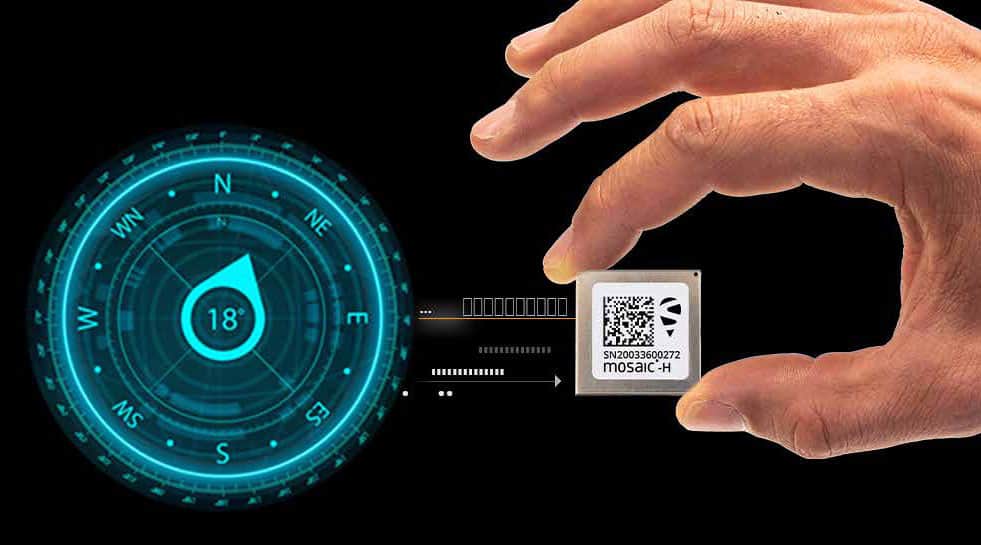
GPS Spoofer for Drone in Anti Drone Systems
A gps spoofer anti drone solution is rarely used alone. Research strongly recommends using it as part of a multi-layer anti-drone system.
Typical integrated systems include:
- RF detection
- Radar detection
- Electro-optical cameras
- GPS spoofing or jamming modules
GPS spoofing is classified as a soft-kill method because it disrupts navigation instead of destroying the drone.
Advantages of Anti Drone System Design
Research highlights these advantages:
- Silent operation compared to jamming
- No physical debris
- Lower risk to the surroundings
- Controlled response
This makes GPS spoofing useful in sensitive locations like airports, government buildings, and public areas.
Limitations of GPS Spoofer for Drone Systems
Despite its advantages, the GPS Spoofer for Drone technology has several important limitations. Academic studies clearly explain these challenges.
1. Dependency on GPS Reliance
GPS spoofing works only if the drone depends on GPS.
Limitations:
- Some drones use vision-based navigation
- Some drones combine GPS with inertial sensors
- Advanced drones cross-check sensor data
Research shows that drones with sensor fusion are harder to spoof fully.
2. Detection by Advanced Drones
Modern research focuses on spoofing detection. Some drones can detect:
- Sudden GPS jumps
- Time inconsistencies
- Conflict between GPS and camera data
If detected, the drone may:
- Switch to manual mode
- Trigger failsafe
- Land immediately
This reduces spoofing success.
3. Limited Effectiveness Against Skilled Operators
Studies show that:
- Manual drone pilots can override the GPS
- FPV drones often rely less on GPS
- Military-grade drones have protected navigation
This limits gps spoofer anti-drone effectiveness against all threat types.
4. Environmental Constraints
Urban areas create problems:
- Signal reflections
- Interference
- Noise
These factors reduce accuracy and range.
5. Legal and Regulatory Constraints
Research papers also highlight legal concerns:
- GPS interference can affect other systems
- Civil aviation safety risks
- Strict regulations in many countries
This means deployment must be controlled and authorized.
Comparison with Other Anti-Drone Techniques
GPS Spoofing vs GPS Jamming
| Feature | GPS Spoofing | GPS Jamming |
|---|---|---|
| Signal Type | Fake GPS | Noise |
| Control | High | Low |
| Detection Risk | Lower | Higher |
| Collateral Impact | Low | High |
Studies show spoofing is more controlled, while jamming is more disruptive.
GPS Spoofing vs Hard-Kill Methods
Hard-kill methods include nets, missiles, or lasers. Research suggests spoofing is safer in urban zones, while hard-kill is suited for military battlefields.
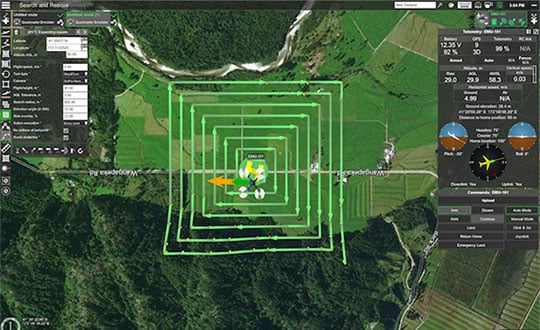
Role of GPS Spoofer for Drones in Future Defence
Academic research predicts:
- Increased use of multi-sensor drones
- Better spoofing detection algorithms
- AI-based navigation security
This means GPS Spoofer for Drone will remain useful but must evolve with better integration inside full anti drone system designs.
Key Takeaways
- GPS Spoofer for Drone exploits weak satellite signals
- Accuracy can reach meter-level control under test conditions
- Range depends on power, environment, and antenna design
- GPS spoofing is a soft-kill anti-drone technique
- It has clear limitations against advanced drones
- The best results come from multi-layer anti drone systems
Conclusion
The accuracy, range, and limitations of GPS Spoofer for Drone systems are well documented in scientific research and real-world experiments. GPS spoofing is not magic, and it is not perfect. But when used correctly as part of a complete anti drone system, it becomes a powerful and controlled method to protect sensitive areas.
As drones continue to evolve, defense technologies must also improve. GPS spoofing will remain an important tool, but only when combined with detection, tracking, and proper system design.