

Anti Drone for Industrial Security: Factories, Refineries & Warehouses
In today’s fast-moving industrial world, security threats aren’t just from the ground. A rising concern is the unauthorized use of drones near sensitive units such as factories, refineries and warehouses. This is where a proper “anti-drone” solution steps in. In this article, we will explore how an anti drone system in India can help industrial sites, what anti drone technology looks like, and how to choose the right protection for your facility.
Table of Contents
Why industrial sites need anti-drone protection
Industrial units like manufacturing plants, chemical refineries, large warehouses and storage yards are vital assets. A breach can lead to major losses, safety risks, environmental damage or business disruption. While drones are increasingly used for beneficial tasks (inspection, monitoring, etc), they also pose a risk if misused for spying, dropping contraband or worse. For example, as industry studies note, drones have been used both for maintenance and as a security concern around pipelines and large industrial zones.
In India, there have been various security incidents and concerns involving drones around critical facilities — prompting many organizations and authorities to tighten aerial security.
One practical measure: authorities around some refineries have created “no-drone zones” extending a couple of kilometres, to legally restrict unauthorized drone flights. For instance, a 2 km no‐drone flying zone was declared around the Indian Oil Corporation’s Digboi Refinery by local authorities.
Given all this, industrial sites need more than just fences and CCTV — they must monitor airspace, detect threats from above, and respond quickly. That’s the domain of an anti drone system.
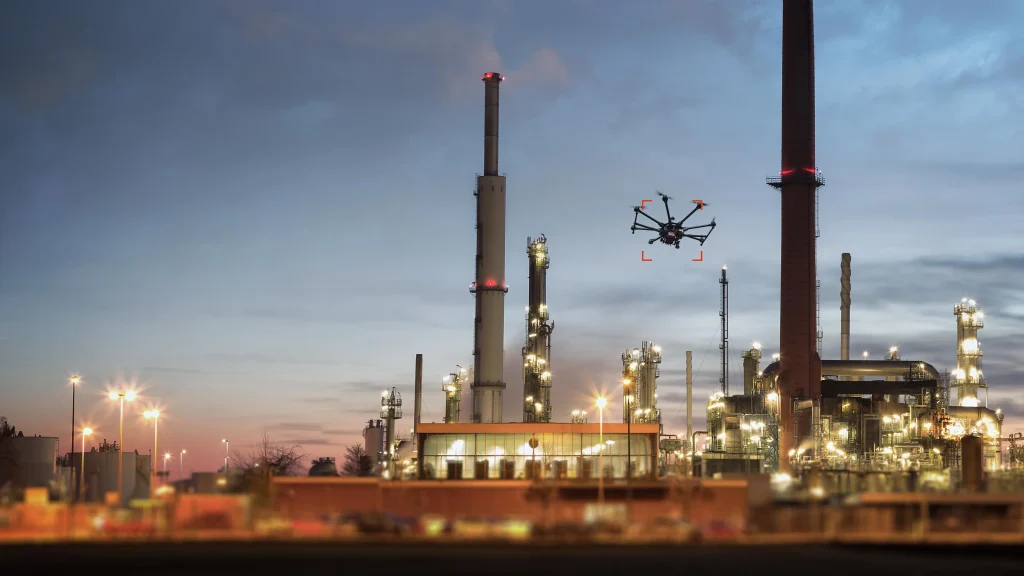
What is an Anti Drone system?
An anti drone system (also known as counter-UAS) is a layered setup of sensors, processing, and response mechanisms designed to detect, track and neutralize unauthorized drones. Here’s how the typical architecture works:
- Detection – Using radar (including modern 3D/4D radar), RF (radio-frequency) sensors listening to remote-controller signals, and electro-optical (EO)/infrared (IR) cameras. Together they scan the skies for flying objects.
- Classification & Tracking – Once a possible drone is detected, AI and analytics determine if it’s a threat (size, speed, flight path, behaviour) and then track it. This helps distinguish benign drones (e.g., a delivery or inspection drone) from hostile uses.
- Alert & Integration – The system sends alerts into the industrial site’s command centre (integrated with CCTV, access-control, and site monitoring dashboards).
- Neutralization or Mitigation – If the anti drone is judged to be a threat, actions may include jamming or spoofing the drone’s links (electronic counter-measures), capture mechanisms or safe takeover, or even physical kinetic options if authorized and safe.
- Reporting & Forensics – After the event, the system logs and reports the incident, helping compliance, audit and future prevention.
Vendors and solution guides emphasize the multi-sensor, multi-layer approach as best practice, rather than relying on a single detection modality.
Why it matters for factories, refineries & warehouses
For large industrial sites, the stakes are higher, and the operational environment is more complex. Some reasons:
- Large grounds: Many factories, warehouses or refineries span wide areas (open yards, storage tanks, pipelines). The anti drone setup must scale accordingly — covering high altitudes, wide perimeters and internal airspaces.
- Critical assets: In warehouses, you may store high-value goods; in refineries, you may have explosive/hazardous units; in factories, you may have proprietary processes. A drone intrusion can compromise safety, IP or supply chain.
- Continuous operations: These sites often run 24 × 7. So the anti drone system must be rugged, reliable and integrated into the central monitoring system of the site (so that the security team can respond in real-time).
- Integration with existing systems: Most industrial sites already have video surveillance, access control, perimeter fencing, radar speed signs, IoT sensors, etc. An anti drone system must talk to these systems and fit into the existing command-monitoring infrastructure (e.g., a central dashboard).
- Compliance and safety constraints: Particularly in refineries and chemical plants, any jamming or physical interception must adhere to regulatory standards and not interfere with other systems (aviation, radio communications). So proper planning and approved equipment are essential.
Because of all this, an off-the-shelf small-event anti-drone box won’t suffice; you need an industrial-grade solution tailored for large site security.
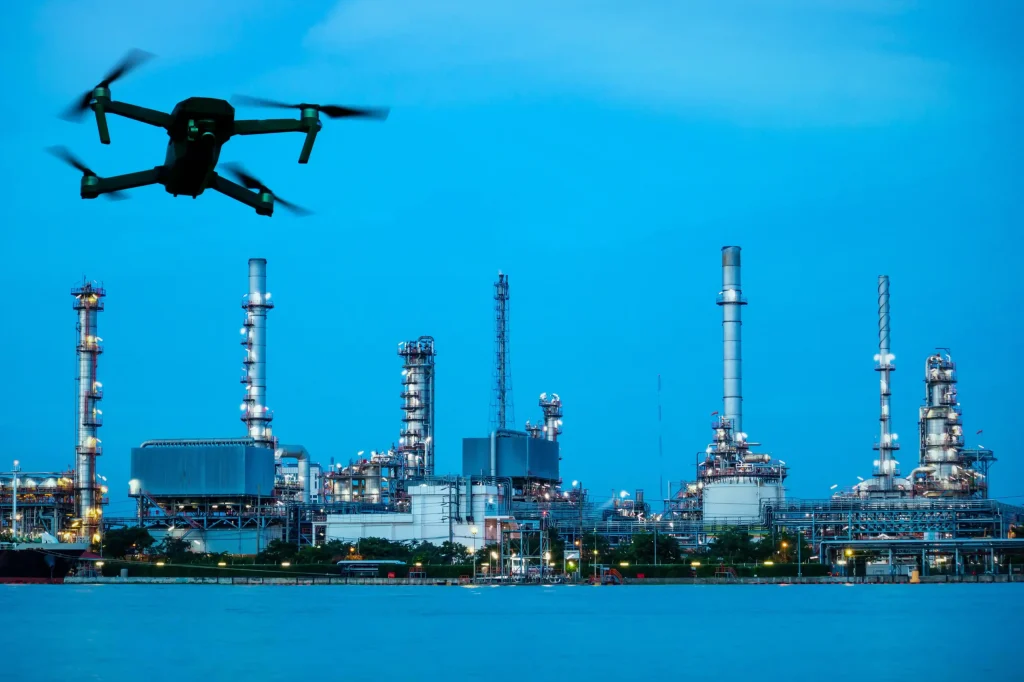
Anti Drone System in India – local context & capabilities
India is not just a user but also a growing producer of anti drone systems. Here are a few key points:
- The public sector firm Bharat Electronics Limited (BEL) lists a “Counter Drone System” product that covers detection, tracking and neutralization. This shows domestic manufacturing capability.
- Private companies like Kotai Electronics market systems such as “KERF007 – Made in India Anti Drone System” which integrates radar + camera + jamming capability.
- These developments mean that Indian industrial sites can procure (and support) anti-drone systems locally — reducing import dependency, easing support/service, and aligning with local regulatory needs.
- Because the Indian industry and regulatory environment is unique (with large industrial estates, critical infrastructure, regulatory zones, and many mid-sized warehouses/factories), local solutions can be tailored for Indian conditions: heat/humidity, dust, large open yards, power availability, and local maintenance.
Given this, specifying an “anti drone system in India” makes sense for Indian industrial users: you can choose locally supported tech, align with Indian airspace rules, and get quicker service/maintenance.
Choosing an anti drone technology for your industrial site
When you evaluate anti drone systems for your factory/refinery/warehouse, here are key features and questions to ask (all simple, practical):
- Detection sensors
- Does the system include radar (preferably 3D/4D) to see moving objects in the airspace?
- Does it include RF sensors to detect controller signals (remote-pilot links)?
- Does it include EO/IR cameras for visual verification and classification?
The combination of radar + RF + camera gives you multi-layer detection, reducing false alarms.
- AI and classification
- Can the system classify objects (bird vs drone vs other flying equipment)?
- Does it provide clear alerts or false-alarm filtering, so your security team isn’t overwhelmed?
AI-based filtering is increasingly important to avoid “too many alerts, too little action”.
- Neutralization/mitigation options
- What happens after detection? Does the system simply alert, or can it disrupt/control the drone?
- Options may include jamming (for RF links), gps spoofing (take-over of command), capture (net or tether), or visual/physical intervention.
- For industrial sites, you may prefer a graduated response: alert → localized jamming → capture or safe landing. Because a full kinetic intervention may be risky near tanks or warehouses.
- Integration & scalability
- Can the system integrate with your site’s existing security operations centre (SOC), dashboards, CCTV, access control, and site monitoring?
- Is the solution scalable over a wide area (large yard, multiple warehouse blocks)? Can you add more sensors/cover more zones easily?
- Compliance & safe deployment
- In India, you must ensure compliance with local rules (for example, any jamming must meet regulatory approvals; operations in public airspace need permissions).
- The vendor should help with legal/aviation/regulatory aspects (DGCA, local police, site clearance).
- The solution should not interfere with other radios, aviation channels, or plant operations.
- Support, maintenance & local service
- Since your site is likely remote or large, you need reliable local service, spare parts, calibration, training and remote monitoring. A local Indian vendor or authorized partner helps.
- Consider environmental durability (heat, dust, humidity, heavy yard activity) — an industrial site needs rugged gear.
- Cost-benefit & ROI
- While cost is important, weigh it against what could happen: a drone dropping contraband or a payload near a refinery could mean huge losses (fire, shutdown, reputational damage).
- Consider the cost of an integrated solution vs adding piecemeal sensors later. A unified anti‐drone system may deliver better ROI.
Implementation steps for your site
Here’s a simple roadmap when you decide to deploy an anti drone system in an industrial site (factory/refinery/warehouse):
- Site survey & risk assessment
- Map your site: perimeter, yard, tank farms, pipelines, warehouse blocks.
- Identify potential drone approaches: open yards, rooftops, nearby launch zones (trees, nearby high-rise, open fields).
- Evaluate existing security infrastructure: CCTV, fences, access control, and SOC.
- Define risk level: What if a drone enters? What assets are at risk? What speed/altitude?
- Define requirements
- Choose detection range (how far you need to detect a drone), altitude coverage, and response time.
- Decide on neutralization levels: Just detection & alert, or active disruption.
- Plan integration: Will this feed into your central monitoring system, alert guards, trigger lockdowns?
- Vendor evaluation & selection
- Shortlist vendors (including local Indian ones) offering anti drone systems. Ask for references from industrial deployments.
- Check that their system covers multi-layer detection, AI classification, integration capabilities and support service.
- Ask for demonstrations or proof of concept (POC) at your site or a similar environment.
- Review compliance: The vendor should help with regulatory/aviation clearances, no-drone zone coordination, and jamming licences if applicable.
- Installation & integration
- Install sensors (radar, RF, cameras) in optimal locations: elevated positions, overlooking the yard and airspace approach vectors.
- Configure software: define alert zones, connect to your SOC, and set escalation protocols.
- Integrate with your existing security (CCTV, access control, alarm systems).
- Train your security team: Recognizing drone alerts, verifying, and responding.
- Set up regular maintenance: cleaning sensors (dust, bird droppings), software updates, and calibration.
- Operations & drills
- Test the system: run drills where dummy drones are flown (with permission) to verify detection and response.
- Define standard operating procedures (SOPs): Upon drone detection → who gets alerted → what happens next (guard deployment, jamming, lockdown).
- Review logs and refine: After each alert or false alarm, analyze and adjust thresholds/coverage.
- Continuous monitoring: Keep the system active all the time (especially for 24×7 operations).
- Audit, reporting & compliance
- Maintain incident logs and reports (for internal audit, insurance, and regulatory compliance).
- Review the performance of the anti drone system periodically (e.g., quarterly).
- Keep up with evolving drone threats: new drone models, swarming behaviour, stealth drones, etc. You may need system upgrades.
Key benefits for industrial security
By deploying a proper anti drone system, your factory, refinery or warehouse gains:
- Early warning and detection of unauthorized aerial approach, before it becomes a major incident.
- Reduced risk of drone-based intrusion or sabotage, thereby protecting people, assets, IP and operations.
- Better integration with your overall security architecture, making aerial threats part of the security plan—not an afterthought.
- Local support and suitability when you choose Indian vendors — faster service, better adaptation for the Indian climate and regulatory environment.
- Compliance and audit readiness: You can demonstrate that you have taken aerial threat mitigation seriously.
- Peace of mind for stakeholders: management, employees, insurance, regulators and neighbouring communities.
Challenges and things to watch out for
While the benefits are strong, a few practical challenges must be managed:
- False alarms: Many flying things (birds, remote-controlled models, helicopters, other drones) may trigger alerts. That’s why classification is key. Without good AI/filtering, you may be flooded with non‐threat alerts.
- Regulatory complexity: Using jamming or physical interception may require permissions; you must ensure you don’t interfere with legitimate aircraft or radio systems.
- Cost and maintenance: A full multi-sensor system can be expensive and needs ongoing maintenance. If the budget is limited, prioritize the most critical zones for coverage.
- Evolving drone threats: Drone technology is evolving fast (smaller drones, swarms, autonomous flight). Your system should be upgradable.
- Integration with site operations: Security teams may already be over-loaded. Without proper training and workflows, an anti-drone system may sit idle or be ignored. Ensure the system is operationally well-connected.
- Physical constraints: At an industrial site, you may have cranes, tall structures, obstructions, metal buildings, heavy dust or electromagnetic interference — the system must be tuned for your environment.
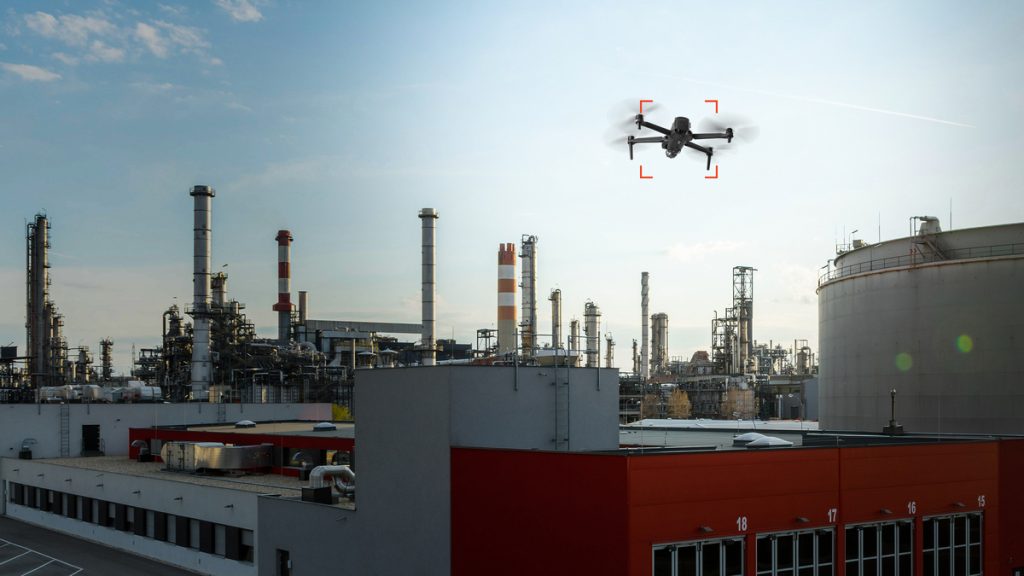
Case study look-out (India context)
While specific industrial site names are sometimes under non-disclosure, here are some indicative glimpses of the Indian market:
- A Hyderabad-based firm launched India’s “first AI-powered anti-drone system” aimed at critical infrastructure, including ports and refineries.
- Kotai Electronics claims made-in-India solutions (KERF007) with combined radar, camera and jamming.
- Public sector firms like BEL already list “Counter Drone System” among their products, signalling readiness for industrial deployments.
These examples illustrate that Indian industrial sites (factories, refineries, warehouses) have access to credible domestic anti-drone technology and suppliers.
Summing up: What you should do now
If you manage or are responsible for security at a factory, refinery or large warehouse in India, here are your next steps:
- Consider aerial threat as real and growing — not just ground intrusion.
- Conduct a drone-risk assessment for your site: map possible drone approaches, assets at risk, and existing security gaps.
- Develop a requirements checklist: detection range, neutralization level, integration need, budget, and vendor support.
- Shortlist credible Indian vendors who specialize in anti drone systems in India (with reference sites and service support).
- Plan a pilot/POC deployment for a high-risk zone in your site, test detection & response, then scale up.
- Train your team, integrate with your SOC, set up SOPs and review performance regularly.
- Keep monitoring the drone threat landscape (new drones, swarms, payloads) and ensure your anti-drone technology is upgradable.
Why this matters for India’s industrial growth
India is undergoing rapid industrial expansion — new factories, refineries, large warehousing parks, logistics hubs. With this growth comes more exposure to diverse threats, including aerial threats like drones. Ensuring robust aerial security with anti drone technology means protecting the investments, people, production and supply chains that drive the country’s economy.
Moreover, by deploying locally developed anti drone systems, Indian industries support domestic manufacturing, local service ecosystems and technology independence — aligning with national priorities such as “Make in India” and “Aatmanirbhar Bharat”.
Conclusion
To sum up, installing an anti-drone system is no longer just a nice-to-have — it’s becoming a vital part of industrial security strategy. For factories, refineries and warehouses in India, the aerial dimension cannot be ignored. With the right anti drone technology, proper vendor evaluation, site-specific planning and team readiness, you can build a defence layer that combines airspace surveillance, alerting and mitigation.
If you approach it systematically — by conducting a survey, defining requirements, selecting a good vendor (especially local to India), integrating into your security operations and training the team — you will be far ahead of many facilities that still treat airspace as a blind spot.