

Top Defence Drone Manufacturing Companies in India 2026
India’s defence sector is changing rapidly as drones become an important part of modern surveillance, border security and military operations. From monitoring difficult border areas to collecting real-time intelligence, drones are helping defence forces improve situational awareness while reducing risks to personnel. As a result, Defence Drone Manufacturing Companies in India are investing heavily in indigenous UAV platforms, artificial intelligence, advanced sensors and autonomous technologies.
At the same time, building military drones is only one part of modern airspace security. Defence organisations also need a reliable drone defence system to detect, track and respond to unauthorised or hostile drones. This has created opportunities for Indian manufacturers working on radar, electro-optical sensors, RF detection, command-and-control software and counter-UAS technologies.
With initiatives such as Make in India and Innovations for Defence Excellence (iDEX), India is encouraging domestic companies, startups and MSMEs to develop advanced drone for defence applications. The result is a growing ecosystem covering surveillance UAVs, logistics drones, swarm technology, loitering systems and anti drone defence systems.
Why India Is Investing in Defence Drone Technology
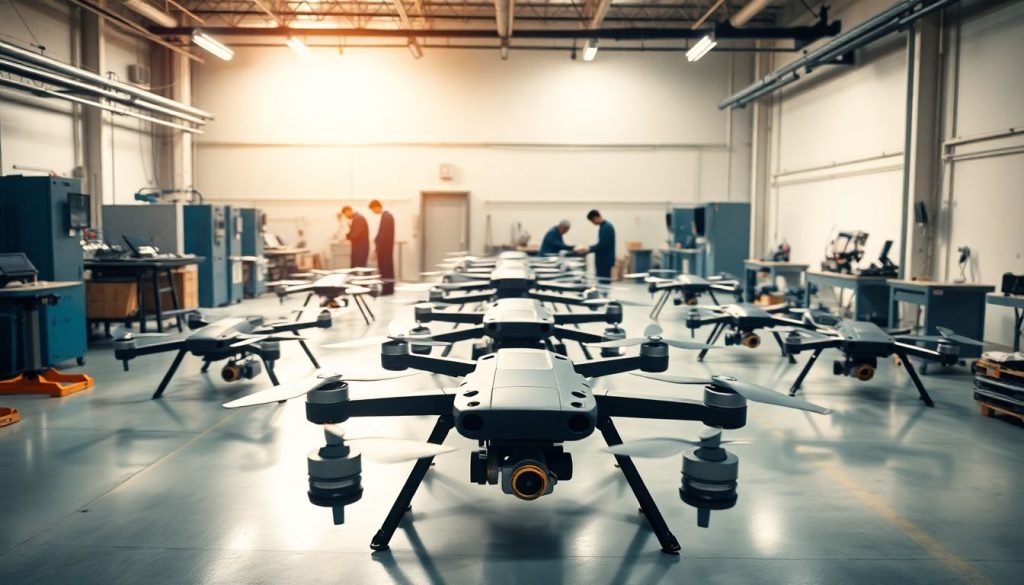
Modern conflicts have demonstrated how relatively small unmanned aircraft can play an important role in surveillance, intelligence gathering and tactical operations. India has therefore increased its focus on developing indigenous defence technologies rather than depending heavily on imported systems.
Government programmes such as Make in India and iDEX are supporting Indian companies developing drones, aerospace systems, artificial intelligence, sensors and counter-drone technologies. Defence indigenisation initiatives are also creating opportunities for private manufacturers to work alongside established public-sector defence organisations.
This policy environment is helping Defence Drone Manufacturing Companies in India increase research, manufacturing and testing capabilities. It also supports the wider objective of developing defence products suited to Indian terrain, climatic conditions and operational requirements.
Different Types of Drone for Defence Applications
There is no single UAV that can meet every military requirement. Different missions require different sizes, payloads, endurance levels, communication systems, and sensors. Therefore, Indian manufacturers are developing specialized platforms for surveillance, reconnaissance, logistics, and other defence applications.
Surveillance and reconnaissance UAVs are commonly designed to provide live video, mapping, and intelligence from sensitive locations. Logistics drones can support operations by carrying supplies to remote or difficult terrain. Indian companies are also researching autonomous systems, swarm technology, and other advanced UAV capabilities.
Alongside these platforms, the demand for anti drone defence systems is increasing. As more drones enter modern airspace, defence establishments and critical infrastructure require systems capable of detecting and assessing potential aerial threats quickly.
Leading Defence Drone Manufacturing Companies in India
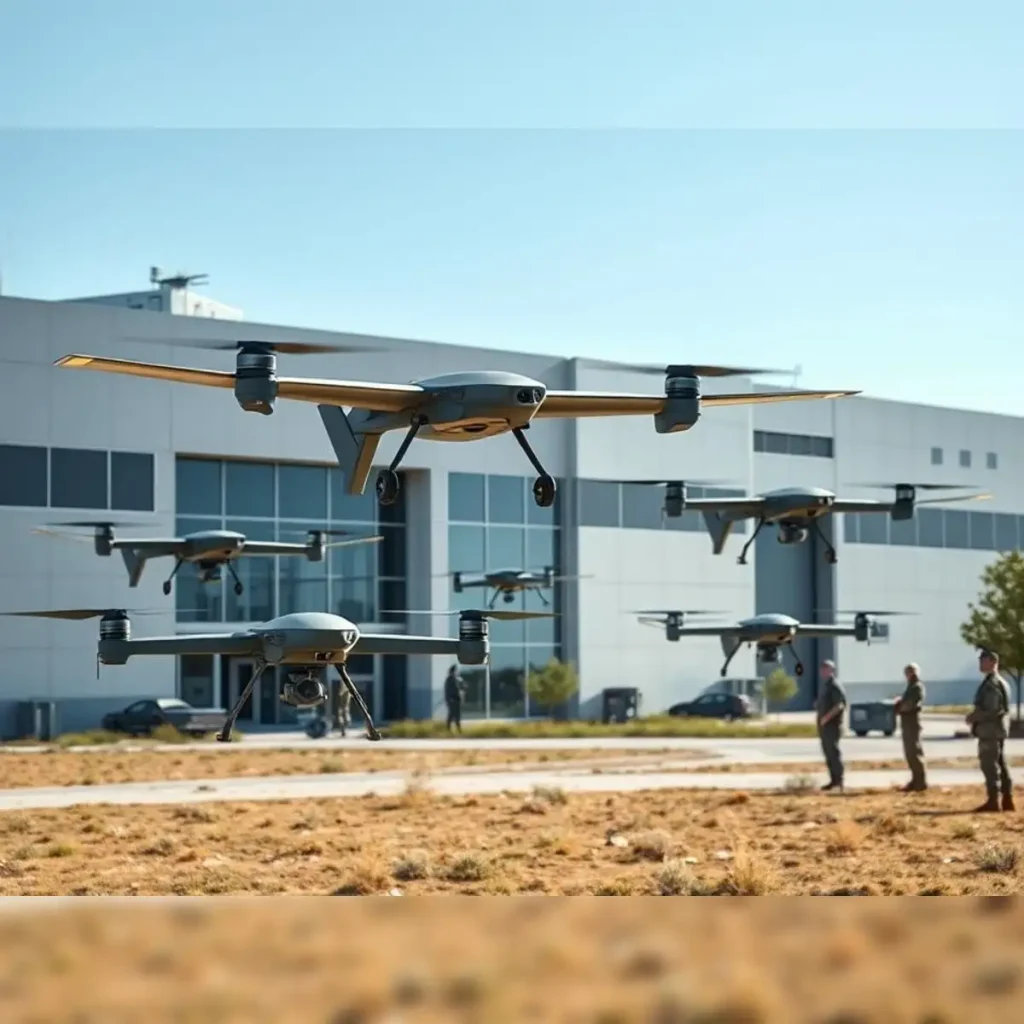
India now has a combination of established aerospace companies, defence manufacturers and specialized drone startups working in the UAV ecosystem. These organizations contribute platforms, sensors, payloads, electronics, communication technologies, and autonomous systems.
1. Hindustan Aeronautics Limited (HAL)
Hindustan Aeronautics Limited is one of India’s best-known aerospace and defence manufacturers. The company has decades of experience in military aircraft, helicopters, avionics, and aerospace engineering and continues to participate in indigenous unmanned and autonomous technology programmes.
HAL’s extensive manufacturing infrastructure and experience working with the Indian Armed Forces make it an important organisation in India’s broader UAV ecosystem. Its participation also demonstrates how traditional aerospace manufacturers are expanding towards next-generation unmanned technologies.
2. ideaForge Technology
ideaForge is one of the prominent Indian UAV companies associated with surveillance and mapping applications. Its unmanned platforms have been developed for demanding operating environments and are used across defence, security and enterprise applications.
The company focuses on UAV endurance, surveillance capability, autonomous operation and reliable aerial intelligence. Its growth represents the increasing importance of specialised Defence Drone Manufacturing Companies in India alongside traditional aerospace manufacturers.
3. Garuda Aerospace
Garuda Aerospace is another Indian drone manufacturer expanding its presence across commercial and defence-related applications. The company has developed UAV solutions for surveillance, infrastructure monitoring, emergency response and other specialised missions.
Its expansion into defence-oriented drone development reflects a wider industry trend. Indian drone manufacturers that initially served civilian markets are increasingly developing specialised drone for defence applications based on operational requirements.
4. Asteria Aerospace
Asteria Aerospace develops drone platforms and related technologies for surveillance, mapping and security applications. The company combines UAV hardware with software and data intelligence to support organisations that require aerial monitoring.
For defence and security applications, the ability to convert aerial data into useful information is increasingly important. Companies such as Asteria demonstrate how India’s UAV ecosystem is moving beyond basic drone hardware towards integrated platforms and intelligent data processing.
5. NewSpace Research & Technologies
NewSpace Research & Technologies is known for its work in autonomous UAV technology and swarm systems. Swarm technology allows multiple unmanned platforms to coordinate operations, potentially improving coverage, flexibility and mission effectiveness.
Autonomous and collaborative UAV technology is expected to remain an important research area within modern defence. Indian development in this field can help strengthen domestic capabilities in next-generation unmanned systems.
6. Dhaksha Unmanned Systems
Dhaksha Unmanned Systems develops UAV platforms for different applications and is part of India’s expanding drone manufacturing ecosystem. The company has worked on unmanned platforms suited to specialised operational requirements.
The emergence of companies such as Dhaksha shows how India’s drone industry is becoming more diverse. Instead of depending on a few large manufacturers, the country now has a growing network of companies specialising in UAV platforms, components and supporting technologies.
Growing Importance of Drone Defence Systems in India
As UAV adoption increases, protecting sensitive airspace from unauthorised drones has become equally important. A modern drone defence system can combine multiple technologies to identify potential threats and provide operators with accurate information before an appropriate response is taken.
Radar, RF detection, electro-optical cameras, thermal imaging and AI-based analytics can be combined to improve detection and classification. Using multiple sensors is particularly useful because small UAVs may be difficult to identify using a single detection technology under all environmental conditions.
This has created a growing Indian counter-UAS industry. Companies are developing anti drone system technologies for defence establishments, borders, airports, ports, power facilities, industrial locations and other critical infrastructure.
Major Anti Drone Defence Systems in India
Bharat Electronics Limited (BEL) has worked with DRDO on indigenous counter-drone technologies designed to detect, track and counter small UAV threats. Such developments demonstrate India’s increasing focus on locally developed counter-UAS capabilities.
Private defence companies are also expanding in this sector. Zen Technologies has developed counter-drone solutions incorporating detection, tracking and response technologies, while Adani Defence & Aerospace has participated in indigenous counter-UAS development. Grene Robotics’ Indrajaal platform represents another approach focused on AI-driven airspace monitoring and wide-area counter-drone capability.
These developments show that India’s defence drone ecosystem is becoming increasingly comprehensive. The country is not only developing UAV platforms but also the anti drone defence systems required to protect sensitive locations from emerging aerial threats.
Kotai Electronics and Made-in-India Anti Drone Systems
Kotai Electronics is contributing to India’s counter-drone ecosystem through indigenous radar, artificial intelligence and surveillance technologies. The company focuses on developing security solutions designed for Indian operational environments and critical infrastructure requirements.
One of its key counter-UAS offerings is the KERF007 Anti Drone System. According to Kotai Electronics, the system combines 4D radar, electro-optical and thermal imaging, local processing and AI-powered software within an integrated architecture. This approach is intended to provide operators with detection, tracking and situational awareness through a unified platform.
Integration is particularly important for counter-drone operations. Instead of treating radar, cameras, processing and threat analysis as completely separate systems, an integrated architecture can help operators receive information through a central interface and make faster decisions.
Kotai Electronics positions its anti drone system solutions for applications such as defence facilities, government infrastructure, industrial sites and other sensitive locations. Its focus on indigenous development also aligns with India’s broader push towards greater self-reliance in defence and security technology.
Technologies Behind Modern Anti Drone Defence Systems
Modern counter-UAS platforms increasingly depend on sensor fusion. Radar can provide information about an airborne object’s movement, while electro-optical and thermal cameras can help operators visually verify potential threats. RF sensors can add another layer of information when a detectable communication link is present.
Artificial intelligence can further assist by analysing sensor information and helping classify objects. This becomes valuable in environments where birds, aircraft and other objects may appear alongside drones. Combining multiple technologies can therefore improve situational awareness and reduce unnecessary alerts.
The development of AI, 4D radar, edge computing and advanced imaging technologies is expected to make the next generation of drone defence system solutions more capable and responsive.
Why Indian-Made Defence Drones Are Becoming Competitive
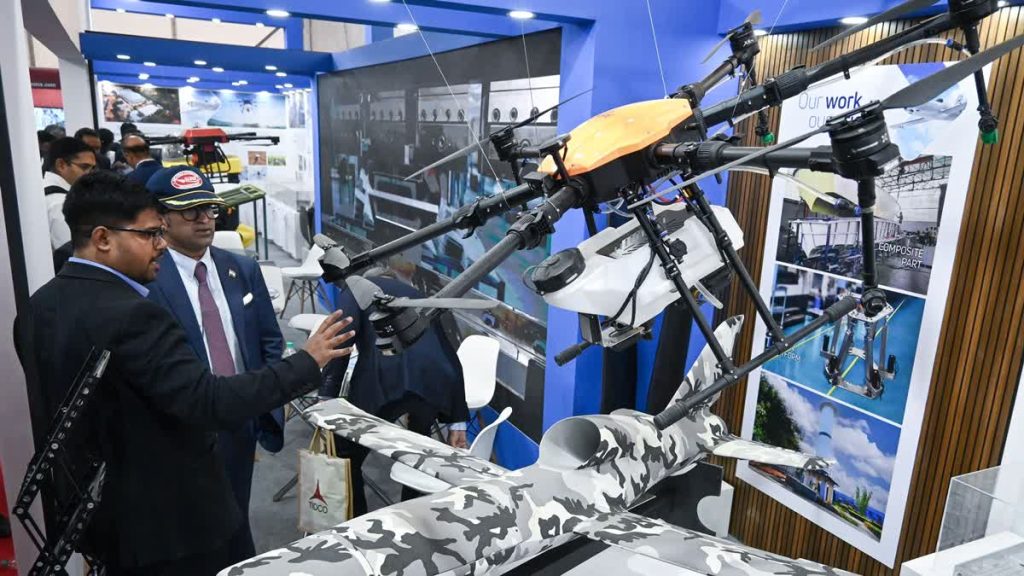
Indian manufacturers have one major advantage: they can develop products specifically around domestic operational requirements. India has deserts, mountains, coastal areas, dense cities, industrial zones and difficult border terrain, creating demanding conditions for both UAVs and counter-UAS systems.
Domestic development also gives organisations greater opportunities for customisation, maintenance and technology upgrades. As Indian manufacturers strengthen their R&D capabilities, locally developed drones, sensors and drone defence system technologies can become increasingly competitive in international markets.
The combination of government support, private investment, defence procurement and a rapidly growing engineering ecosystem is helping accelerate this development.
Future of Defence Drone Manufacturing in India
The next phase of India’s drone industry is likely to focus strongly on autonomy, artificial intelligence, sensor fusion, swarm technologies, longer endurance and improved communication systems. Counter-UAS development will evolve alongside these technologies as aerial threats become more sophisticated.
The Indian defence sector is also expected to see deeper collaboration between defence PSUs, private manufacturers, startups, research organisations and technology companies. Such partnerships can shorten development cycles and accelerate the deployment of indigenous solutions.
For Defence Drone Manufacturing Companies in India, this represents a major long-term opportunity. Companies capable of combining hardware manufacturing with AI, radar, computer vision and autonomous technologies will be well positioned as defence requirements continue to evolve.
Conclusion
Defence Drone Manufacturing Companies in India are becoming an important part of the country’s defence modernisation and self-reliance strategy. Companies such as HAL, ideaForge, Garuda Aerospace, Asteria Aerospace, NewSpace Research and Dhaksha Unmanned Systems represent different parts of the growing UAV ecosystem, from aerospace engineering to autonomous and surveillance platforms.
At the same time, India is strengthening its counter-UAS capabilities through indigenous anti drone defence systems. BEL, Zen Technologies, Adani Defence, Grene Robotics and other organisations are contributing technologies designed to detect and respond to emerging drone threats.
Kotai Electronics adds another Made-in-India dimension through its KERF007 Anti Drone System, combining technologies such as 4D radar, AI-based processing and advanced imaging for integrated drone detection and situational awareness.