

The Role of AI in Modern Industrial Automation Solutions
Industries across the world are rapidly adopting advanced technologies to improve productivity, reduce operational costs, and increase efficiency. Among these technologies, Artificial Intelligence (AI) has emerged as one of the most transformative innovations. Today, AI is revolutionizing how factories, warehouses, production facilities, and industrial plants operate.
Modern Industrial Automation Solutions are no longer limited to programmable machines and automated workflows. With the integration of AI, industrial systems can analyze data, predict failures, optimize processes, and make intelligent decisions in real time. This combination of automation and intelligence is helping businesses achieve higher levels of operational excellence and competitiveness.
In this article, we will explore the role of AI in modern Industrial Automation Solutions, its benefits, applications, challenges, and future trends shaping the industrial sector.
Understanding Industrial Automation Solutions
Industrial Automation Solutions refer to the use of technologies, software, control systems, sensors, robotics, and communication networks to automate industrial processes with minimal human intervention.
Traditional industrial automation systems focus on executing predefined tasks efficiently. These systems include:
- Programmable Logic Controllers (PLCs)
- Supervisory Control and Data Acquisition (SCADA)
- Human Machine Interfaces (HMIs)
- Industrial Robotics
- Sensors and Actuators
- Manufacturing Execution Systems (MES)
While these technologies have significantly improved industrial operations, they often rely on fixed rules and programmed instructions. AI introduces intelligence into these systems, enabling them to learn, adapt, and improve continuously.
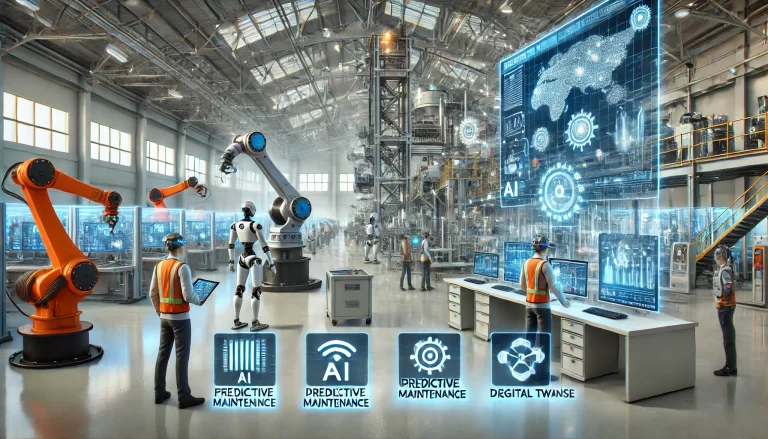
What is AI in Industrial Automation?
AI in industrial automation refers to the use of machine learning, computer vision, deep learning, natural language processing, andpredictive analytics to enhance automated industrial processes.
Unlike conventional automation systems, AI-powered solutions can:
- Analyze large volumes of data
- Detect patterns and anomalies
- Predict future events
- Optimize production processes
- Make data-driven decisions
- Continuously improve performance
By integrating AI into automation systems, industries can move from reactive operations to proactive and predictive management.
Why AI is Important for Modern Industrial Automation Solutions
The industrial sector generates enormous amounts of data every day from machines, sensors, production lines, and operational systems. Without AI, much of this valuable data remains unused.
AI transforms raw industrial data into actionable insights that help organizations:
- Improve production efficiency
- Reduce downtime
- Enhance quality control
- Optimize resource utilization
- Improve workplace safety
- Increase profitability
As industries become more connected through Industry 4.0 technologies, AI becomes a critical component of modern Industrial Automation Solutions.
Key Applications of AI in Industrial Automation
1. Predictive Maintenance
One of the most valuable applications of ai for industrial automation is predictive maintenance. Traditional maintenance strategies typically follow either scheduled maintenance or reactive maintenance approaches. These methods can result in unnecessary maintenance costs or unexpected equipment failures.
AI-powered predictive maintenance systems analyze:
- Vibration data
- Temperature readings
- Pressure levels
- Equipment performance metrics
- Historical maintenance records
Using machine learning algorithms, the system predicts when a machine is likely to fail and recommends maintenance before a breakdown occurs.
Benefits include:
- Reduced downtime
- Lower maintenance costs
- Increased equipment lifespan
- Improved productivity
2. Intelligent Quality Inspection
Product quality is critical in manufacturing industries. AI-powered computer vision systems can inspect products at high speed and with exceptional accuracy. Cameras combined with AI algorithms can detect:
- Surface defects
- Cracks
- Scratches
- Dimensional variations
- Missing components
Unlike manual inspections, AI-based quality control systems work continuously and consistently, improving product quality while reducing labor costs.
3. Process Optimization
Modern Industrial Automation Solutions use AI to continuously analyze production data and identify opportunities for improvement.
AI systems can optimize:
- Production schedules
- Machine utilization
- Energy consumption
- Material usage
- Workflow efficiency
By making real-time adjustments, AI helps manufacturers achieve higher productivity with fewer resources.
4. Industrial Robotics
Industrial robots have been used for decades in manufacturing facilities. However, AI has significantly expanded their capabilities.
AI-powered robots can:
- Adapt to changing environments
- Recognize objects
- Learn new tasks
- Collaborate with human workers
- Improve accuracy over time
These intelligent robots are increasingly being deployed in:
- Automotive manufacturing
- Electronics assembly
- Packaging operations
- Warehouse automation
5. Supply Chain Optimization
Supply chain management is becoming increasingly complex due to global operations and changing customer demands.
AI helps optimize:
- Inventory management
- Demand forecasting
- Logistics planning
- Warehouse operations
- Supplier management
By improving supply chain visibility and efficiency, businesses can reduce costs and improve customer satisfaction.
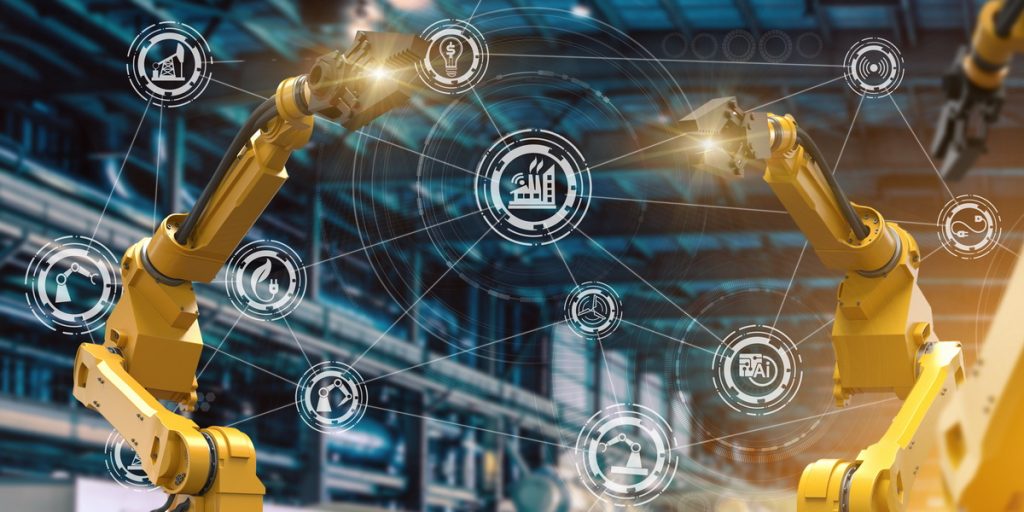
AI-Powered Smart Factories
The concept of smart factories is at the heart of Industry 4.0. A smart factory uses connected devices, sensors, cloud computing, IoT, and AI to create an intelligent manufacturing environment.
AI enables smart factories to:
- Monitor operations in real time
- Predict equipment failures
- Automatically adjust production schedules
- Improve product quality
- Optimize energy consumption
As a result, smart factories can achieve higher efficiency, flexibility, and responsiveness compared to traditional manufacturing facilities.
Benefits of AI in Industrial Automation Solutions
The integration of Artificial Intelligence into modern Industrial Automation Solutions is helping industries achieve levels of efficiency, accuracy, and productivity that were previously impossible. AI does not simply automate repetitive tasks; it adds intelligence to industrial systems, allowing them to analyze data, learn from experience, and make better decisions over time. As industries continue their digital transformation journey, AI is becoming a key driver of operational excellence and business growth.
Increased Productivity and Operational Efficiency
One of the biggest benefits of AI-powered Industrial Automation Solutions is the significant improvement in productivity. Traditional automation systems perform tasks based on predefined instructions, but AI systems continuously analyze production data and identify opportunities for optimization.
For example, AI can monitor machine performance, production schedules, and resource utilization in real time. If it detects bottlenecks or inefficiencies, it can recommend or automatically implement adjustments to improve workflow. This allows factories to maximize output without increasing labor or operational costs.
By reducing manual intervention and improving process efficiency, businesses can produce more products in less time while maintaining consistent quality standards.
Reduced Equipment Downtime
Unexpected equipment failures can cause major disruptions in industrial operations. Downtime not only stops production but also leads to financial losses, delayed deliveries, and increased maintenance expenses.
AI-powered predictive maintenance systems help solve this problem by continuously monitoring machine health. Using data collected from sensors, AI algorithms can identify early warning signs of potential failures, such as abnormal vibrations, temperature increases, or pressure fluctuations.
Instead of waiting for equipment to fail, maintenance teams receive alerts before a breakdown occurs. This proactive approach reduces downtime, improves equipment reliability, and extends the lifespan of valuable industrial assets.
Improved Product Quality
Maintaining high product quality is essential for customer satisfaction and business success. Traditional quality inspections often depend on human operators, which can result in inconsistencies and errors, especially in high-volume production environments.
AI-powered computer vision systems can inspect products with exceptional accuracy and speed. These systems use cameras and machine learning algorithms to detect defects, scratches, cracks, alignment issues, missing components, and other quality problems.
Unlike human inspectors, AI systems can work continuously without fatigue. This ensures that every product is inspected according to the same standards, resulting in higher quality products and fewer customer complaints.
Better Decision-Making Through Data Analysis
Modern industrial facilities generate massive amounts of operational data every day. Without advanced analytics tools, much of this information remains unused.
AI transforms raw industrial data into valuable business insights. By analyzing historical and real-time information, AI systems help managers understand production trends, identify inefficiencies, forecast future demand, and optimize resource allocation.
This data-driven approach enables faster and more accurate decision-making, helping organizations respond quickly to changing market conditions and operational challenges.
Enhanced Workplace Safety
Safety is a top priority in every industrial environment. AI contributes significantly to workplace safety by identifying potential hazards before they become serious incidents.
AI-powered surveillance systems can monitor production areas and detect unsafe behaviors such as workers entering restricted zones, failing to wear personal protective equipment (PPE), or operating machinery incorrectly.
In hazardous industries such as mining, oil and gas, and chemical processing, AI can monitor environmental conditions and provide early warnings about dangerous situations. This helps organizations reduce workplace accidents and create safer working environments for employees.
Lower Operational Costs
Cost reduction is one of the main reasons businesses invest in AI for industrial automation. AI improves efficiency across multiple areas of industrial operations, including maintenance, energy consumption, production planning, and inventory management.
By minimizing waste, reducing downtime, and optimizing resource utilization, AI helps businesses lower operating expenses while maintaining high productivity levels. Over time, these savings can provide a substantial return on investment.
Optimized Energy Consumption
Energy costs represent a significant portion of industrial operating expenses. AI systems can analyze energy usage patterns across production facilities and identify opportunities to improve efficiency.
For example, AI can automatically adjust machine operations during peak energy demand periods, optimize heating and cooling systems, and identify equipment consuming excessive power.
As sustainability becomes increasingly important, AI-powered energy management helps organizations reduce both operational costs and environmental impact.
Greater Scalability and Flexibility
Modern manufacturing environments must adapt quickly to changing customer demands and market conditions. AI-driven Industrial Automation Solutions provide the flexibility needed to handle varying production requirements.
AI systems can dynamically adjust production schedules, optimize resource allocation, and support rapid scaling of operations. This flexibility allows businesses to respond faster to market opportunities while maintaining efficient operations.
AI Technologies Driving Industrial Automation
Machine Learning
Machine learning enables systems to learn from historical data and improve performance without explicit programming.
Applications include:
- Predictive maintenance
- Demand forecasting
- Process optimization
Computer Vision
Computer vision allows machines to interpret and analyze visual information.
Applications include:
- Quality inspection
- Safety monitoring
- Object recognition
Deep Learning
Deep learning models can process complex industrial data and identify hidden patterns.
Applications include:
- Fault detection
- Image analysis
- Predictive analytics
Natural Language Processing (NLP)
NLP enables communication between humans and machines through natural language.
Applications include:
- Voice-controlled systems
- Maintenance assistance
- Intelligent reporting
Digital Twins
Digital twins are virtual representations of physical assets.
AI-powered digital twins help organizations:
- Simulate production scenarios
- Predict equipment behavior
- Optimize operational performance
Challenges of Implementing AI in Industrial Automation
Despite its advantages, implementing AI in Industrial Automation Solutions comes with challenges.
High Initial Investment
AI deployment often requires investments in:
- Hardware
- Sensors
- Data infrastructure
- Software platforms
- Skilled personnel
Data Quality Issues
AI systems depend on accurate and high-quality data. Poor data quality can reduce effectiveness.
Cybersecurity Risks
Connected industrial environments are vulnerable to cyber threats. Strong cybersecurity measures are essential.
Skill Gaps
Many organizations face shortages of professionals with expertise in AI, machine learning, and industrial automation technologies.
Integration Complexity
Integrating AI with existing industrial systems can be technically challenging and time-consuming.
Future Trends of AI in Industrial Automation
The future of AI in industrial automation is incredibly promising. As AI technologies continue to evolve, industries will gain access to even more advanced capabilities that will further improve efficiency, productivity, and decision-making.
Several emerging trends are expected to shape the next generation of Industrial Automation Solutions.
Autonomous Manufacturing Systems
One of the most significant future developments is the rise of autonomous manufacturing. In these environments, AI-powered systems will manage production processes with minimal human intervention.
Machines will be able to monitor their own performance, adjust production parameters automatically, order replacement parts when necessary, and coordinate with other equipment to optimize overall operations. This level of automation will help manufacturers achieve higher productivity while reducing labor-intensive processes.
AI-Powered Collaborative Robots (Cobots)
Collaborative robots, commonly known as cobots, are designed to work alongside human workers safely and efficiently. Unlike traditional industrial robots that operate in isolated areas, AI-powered cobots can understand their surroundings, recognize human movements, and adapt their actions accordingly.
In the future, cobots will take on increasingly complex tasks, assisting workers with assembly operations, material handling, packaging, inspection, and maintenance activities.
Edge AI for Real-Time Decision Making
Traditional AI systems often rely on cloud computing for data processing. However, as industrial operations become more time-sensitive, Edge AI is gaining popularity. Edge AI processes data directly at the source, such as sensors, machines, or industrial controllers. This reduces latency and enables faster decision-making.
For example, an AI-powered machine can instantly detect an abnormal operating condition and take corrective action without waiting for instructions from a remote server. This capability will become increasingly important for mission-critical industrial applications.
Digital Twins and Virtual Factories
Digital twin technology is expected to play a major role in the future of industrial automation. A digital twin is a virtual representation of a physical machine, process, or entire factory. AI continuously updates the digital model using real-time operational data.
Manufacturers can use digital twins to simulate production scenarios, test process improvements, identify potential failures, and optimize operations without disrupting actual production. As AI and digital twin technologies become more advanced, virtual factories will become powerful tools for industrial innovation.
Hyper Automation
Hyper automation combines multiple technologies, including AI, machine learning, robotics, IoT, and advanced analytics, to automate entire business and industrial processes.
Rather than automating individual tasks, hyper automation creates intelligent systems capable of managing complete workflows from start to finish. This trend will enable organizations to achieve greater efficiency, consistency, and operational visibility across their entire value chain.
Generative AI in Manufacturing
Generative AI is emerging as a powerful tool for industrial innovation. Engineers can use generative AI to design products, optimize manufacturing processes, generate maintenance procedures, and improve production planning.
By analyzing vast amounts of engineering and operational data, generative AI can recommend solutions that humans may not have considered, accelerating innovation and improving efficiency.
Industries Benefiting from AI-Powered Industrial Automation
Almost every industrial sector can benefit from AI-driven Industrial Automation Solutions. However, some industries are experiencing particularly significant advantages due to the nature of their operations and the volume of data they generate.
Automotive Manufacturing
The automotive industry has been one of the earliest adopters of AI for industrial automation. AI-powered robots perform tasks such as welding, painting, assembly, and quality inspection with exceptional precision. Computer vision systems inspect vehicle components for defects, while predictive maintenance reduces downtime across production lines. As electric vehicles and smart manufacturing continue to grow, AI will play an even larger role in automotive production.
Pharmaceutical Industry
The pharmaceutical sector requires strict quality control, regulatory compliance, and production accuracy. AI helps pharmaceutical manufacturers optimize production processes, monitor equipment performance, ensure product consistency, and improve quality assurance. AI-powered systems can also analyze large datasets to accelerate drug research and development activities.
Food and Beverage Industry
Food manufacturers use AI to improve product quality, optimize packaging operations, monitor food safety, and reduce waste. Computer vision systems inspect products for defects, while predictive analytics helps optimize production schedules based on demand forecasts. AI also supports traceability and compliance requirements throughout the food supply chain.
Oil and Gas Industry
The oil and gas sector operates in challenging and often hazardous environments. AI-powered monitoring systems help detect equipment issues, optimize drilling operations, improve asset performance, and enhance workplace safety. Predictive maintenance is particularly valuable in this industry because equipment failures can result in significant operational and financial consequences.
Logistics and Warehousing
Modern warehouses generate enormous amounts of operational data, making them ideal candidates for AI-driven automation.
AI helps optimize inventory management, warehouse layouts, picking routes, and shipping schedules. Autonomous mobile robots can transport materials efficiently throughout warehouse facilities. These capabilities improve order accuracy, reduce operational costs, and accelerate delivery times.
Chemical Processing Industry
Chemical plants require precise process control and continuous monitoring. AI helps optimize chemical reactions, improve production efficiency, reduce waste, and maintain product quality. Advanced monitoring systems can also identify safety risks and provide early warnings before hazardous situations develop.
Electronics Manufacturing
Electronics manufacturing demands extremely high levels of precision and quality control. AI-powered inspection systems can detect microscopic defects that would be difficult for human inspectors to identify. This helps manufacturers improve product reliability while reducing production losses.
Smart Cities and Infrastructure Projects
Beyond traditional manufacturing, AI-powered Industrial Automation Solutions are increasingly being used in smart city infrastructure projects.
Applications include:
- Intelligent transportation systems
- Traffic management
- Smart energy grids
- Water management systems
- Public safety monitoring
- Environmental monitoring
These solutions help cities improve efficiency, sustainability, and quality of life for residents. As AI technologies continue to mature, their impact across industrial sectors will only grow stronger. Organizations that adopt intelligent automation today will be better positioned to compete in the highly connected and data-driven industrial landscape of the future.
How Businesses Can Start Implementing AI in Industrial Automation
Organizations planning to adopt AI should follow these steps:
- Identify operational challenges.
- Define automation objectives.
- Collect and organize industrial data.
- Choose suitable AI technologies.
- Start with pilot projects.
- Train employees.
- Scale successful implementations.
- Continuously monitor performance.
A strategic approach ensures successful AI adoption while minimizing risks and costs.
Conclusion
Artificial Intelligence is transforming the future of manufacturing and industrial operations. By combining intelligent data analysis with advanced automation technologies, modern Industrial Automation Solutions are becoming more efficient, predictive, and adaptive than ever before.
From predictive maintenance and quality inspection to smart factories and autonomous manufacturing, AI in industrial automation is helping businesses improve productivity, reduce costs, enhance safety, and gain a competitive advantage.
As Industry 4.0 continues to evolve, organizations that invest in AI for industrial automation will be better positioned to meet future challenges, optimize operations, and achieve long-term growth. The integration of AI with industrial automation is no longer a future possibility—it is a present-day necessity for industries seeking innovation, efficiency, and sustainable success.
What are Industrial Automation Solutions?
Industrial Automation Solutions are technologies and systems that automate industrial processes using PLCs, SCADA, robotics, sensors, and software to improve efficiency and productivity.
What are the benefits of AI in industrial automation?
Benefits include reduced downtime, improved product quality, lower operational costs, enhanced safety, better decision-making, and increased productivity.
What industries use AI-powered industrial automation?
Industries such as manufacturing, automotive, pharmaceuticals, food processing, oil and gas, logistics, and warehousing use AI-powered automation solutions.
What is the future of AI in industrial automation?
The future includes autonomous manufacturing, collaborative robots, edge AI, digital twins, hyper automation, and fully connected smart factories.