

How Industrial Automation Improves Productivity and Efficiency
Introduction
In today’s competitive business world, industries are always looking for better ways to increase production, reduce costs, and improve quality. One of the most effective ways to achieve these goals is through Industrial Automation. Modern factories and manufacturing plants are adopting advanced technologies to automate different processes and improve overall performance.
From small manufacturing units to large industrial plants, automation is helping businesses work faster and smarter. Machines, sensors, software, and intelligent control systems are replacing many manual tasks and making operations more accurate and efficient.
This article explains how Industrial Automation improves productivity and efficiency, its benefits, key components, and why industries should invest in modern industrial automation solutions.
What is Industrial Automation?
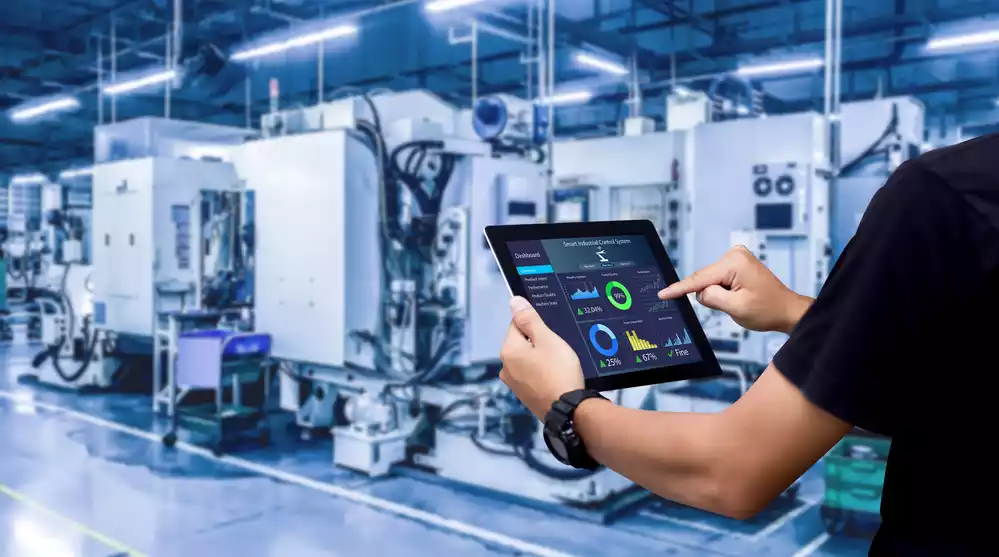
Industrial Automation is the use of technology, machines, control systems, and software to perform industrial tasks with minimal human involvement. Automation helps industries monitor, control, and operate machines automatically. These systems can manage production lines, monitor equipment performance, collect data, and improve overall operational efficiency.
Modern automation systems include:
- Programmable Logic Controllers (PLC)
- Supervisory Control and Data Acquisition (SCADA)
- Human Machine Interface (HMI)
- Industrial Sensors
- Robotics
- Industrial Internet of Things (IIoT)
- Artificial Intelligence (AI)
These technologies work together to make industrial operations faster, safer, and more reliable.
Why Industries Need Automation
Traditional manufacturing processes often depend heavily on manual work. Human errors, delays, inconsistent quality, and operational inefficiencies can affect production and profitability.
Industrial automation helps solve these challenges by:
- Increasing production speed
- Reducing human errors
- Improving product quality
- Lowering operational costs
- Enhancing worker safety
- Improving process monitoring
As industries face increasing market competition, automation has become a necessity rather than a luxury.
How Industrial Automation Improves Productivity
1. Faster Production Cycles
One of the biggest advantages of Industrial Automation is faster production. Automated machines can work continuously without fatigue. Unlike human workers, machines do not require frequent breaks, resulting in higher production output.
For example:
- Automated assembly lines can run 24/7.
- Packaging machines can process products much faster.
- Automated material handling systems reduce movement delays.
As production speed increases, businesses can meet customer demands more efficiently.
2. Reduced Human Errors
Manual operations often lead to mistakes such as:
- Incorrect measurements
- Wrong product assembly
- Data entry errors
- Quality issues
Automation systems follow pre-programmed instructions with high accuracy. This significantly reduces errors and improves consistency. When fewer mistakes occur, industries spend less time on rework and corrections, leading to higher productivity.
3. Better Resource Utilization
Industrial automation helps companies use resources more efficiently.
Automated systems monitor:
- Raw material usage
- Machine performance
- Energy consumption
- Production rates
This data helps industries optimize operations and avoid wastage. Better resource management directly improves productivity and profitability.
4. Continuous Operations
Machines can work around the clock with minimal interruptions. Automated production lines can continue operating during:
- Night shifts
- Weekends
- High-demand periods
This increases production capacity and helps companies achieve more output within the same time frame.
5. Improved Workflow Management
Modern automation systems connect different production stages into a single integrated workflow.
For example:
- Raw materials are automatically moved to production areas.
- Machines communicate with each other.
- Finished products are automatically packed and labeled.
This smooth workflow eliminates bottlenecks and improves overall efficiency.
How Industrial Automation Improves Efficiency
1. Real-Time Monitoring
Modern industrial automation solutions provide real-time visibility into operations.
Managers can monitor:
- Machine status
- Production output
- Equipment health
- Process performance
Real-time monitoring allows quick decision-making and helps prevent operational issues before they become major problems.
2. Predictive Maintenance
Unexpected machine breakdowns can cause significant production losses. Industrial automation systems use sensors and analytics to continuously monitor equipment conditions.
They can detect:
- Temperature changes
- Vibration issues
- Motor performance problems
- Wear and tear
This enables predictive maintenance, where maintenance is performed before equipment fails.
As a result:
- Downtime decreases
- Repair costs reduce
- Equipment life increases
3. Energy Efficiency
Energy costs are a major expense for industries.
Automation systems optimize energy usage by:
- Controlling equipment operation
- Reducing idle machine time
- Managing power consumption
- Monitoring energy usage patterns
This helps companies lower electricity bills while maintaining production efficiency.
4. Better Quality Control
Quality is critical for every industry. Automated inspection systems use cameras, sensors, and AI technologies to identify defects during production.
Benefits include:
- Consistent product quality
- Reduced rejection rates
- Improved customer satisfaction
- Lower quality control costs
Better quality means fewer returns and stronger brand reputation.
5. Faster Decision Making
Industrial automation generates valuable operational data.
Managers can use dashboards and reports to analyze:
- Production trends
- Equipment performance
- Inventory levels
- Efficiency metrics
Data-driven decisions help improve operations and maximize efficiency.
Key Components of Industrial Automation
Programmable Logic Controllers (PLC)
PLCs are industrial computers used to control machines and processes.
They help automate tasks such as:
- Conveyor operations
- Machine control
- Production sequencing
- Equipment monitoring
PLCs are highly reliable and widely used in manufacturing industries.
SCADA Systems
SCADA systems allow centralized monitoring and control of industrial operations.
They provide:
- Real-time data visualization
- Alarm management
- Historical data storage
- Remote monitoring capabilities
SCADA helps improve operational control and efficiency.
Human Machine Interface (HMI)
HMI provides a user-friendly interface between operators and machines.
Operators can:
- View machine status
- Control equipment
- Monitor performance
- Receive alerts
This improves operational management and productivity.
Industrial Sensors
Sensors collect important data from machines and production processes.
Common sensors measure:
- Temperature
- Pressure
- Flow
- Proximity
- Speed
Sensor data helps automation systems make intelligent decisions.
Robotics
Industrial robots perform repetitive tasks with high speed and accuracy.
Common applications include:
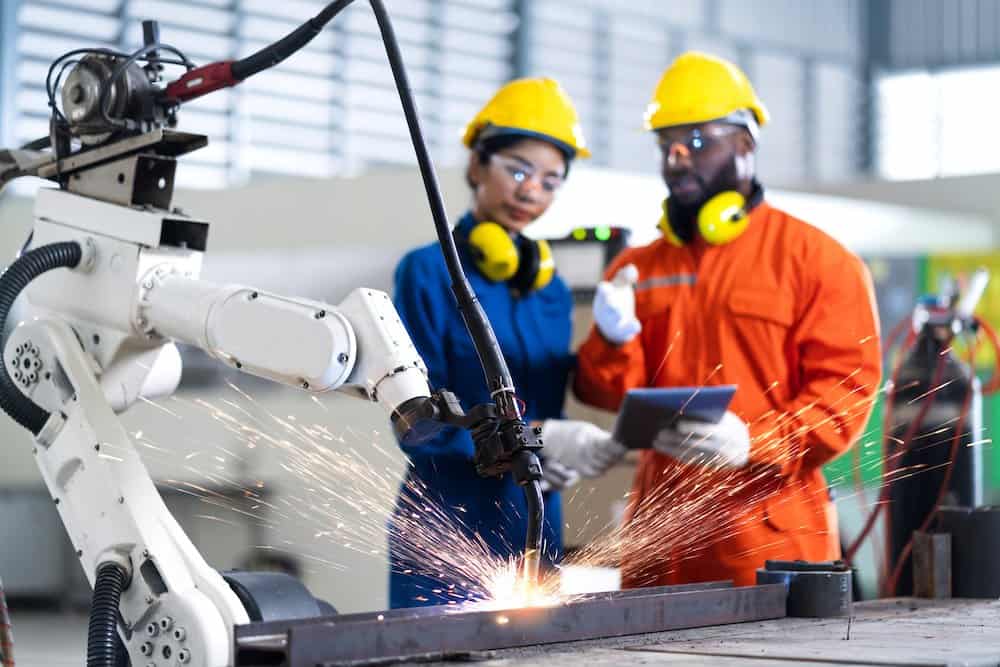
- Welding
- Painting
- Packaging
- Assembly
- Material handling
Robotics significantly improves production efficiency and consistency.

Industrial Automation in Different Industries
Manufacturing Industry
Manufacturers use automation to improve:
- Assembly operations
- Product quality
- Production speed
- Inventory management
Automation helps manufacturers remain competitive in global markets.
Food and Beverage Industry
Automation is used for:
- Processing
- Packaging
- Quality inspection
- Labeling
It ensures product safety and consistency.
Pharmaceutical Industry
Industrial automation helps pharmaceutical companies maintain strict quality standards.
Applications include:
- Drug production
- Packaging
- Inspection
- Compliance monitoring
Automotive Industry
Automotive manufacturers use advanced automation systems for:
- Robotic assembly
- Welding
- Painting
- Testing
Automation improves production speed and product quality.
Logistics and Warehousing
Automated systems help manage:
- Inventory tracking
- Material movement
- Order processing
- Warehouse operations
This increases efficiency and reduces manual labor.
Industrial Automation Solutions Efficiency Benefits
Many organizations invest in automation because of the significant industrial automation solutions efficiency benefits.
Some major benefits include:
Lower Operational Costs
Automation reduces:
- Labor costs
- Material wastage
- Energy consumption
- Maintenance expenses
This improves overall profitability.
Increased Production Capacity
Automated systems can produce more products in less time. Higher production capacity helps companies meet growing customer demands.
Improved Accuracy
Automation eliminates many manual errors and improves process precision. Accurate operations lead to better product quality and reduced waste.
Enhanced Safety
Industrial environments often involve hazardous conditions. Automation reduces human exposure to:
- High temperatures
- Heavy machinery
- Toxic materials
- Dangerous processes
This creates a safer workplace.
Better Compliance
Many industries must follow strict regulations. Automation systems help maintain:
- Process consistency
- Documentation
- Quality standards
- Regulatory compliance
Future of Industrial Automation
The future of Industrial Automation is becoming more intelligent and connected.
Emerging technologies include:
Artificial Intelligence (AI)
AI helps machines analyze data and make intelligent decisions.
Applications include:
- Predictive maintenance
- Quality inspection
- Production optimization
Industrial Internet of Things (IIoT)
IIoT connects machines, sensors, and software through networks.
This enables:
- Real-time monitoring
- Data sharing
- Smart manufacturing
Digital Twins
Digital twins create virtual models of physical equipment. Industries can simulate operations and identify improvements before implementing changes.
Cloud-Based Automation
Cloud platforms provide:
- Remote monitoring
- Data storage
- Analytics
- Scalability
Cloud technology makes automation more flexible and cost-effective.
Challenges in Industrial Automation
Although automation offers many benefits, companies may face some challenges during implementation.
Initial Investment
Automation requires investment in:
- Equipment
- Software
- Infrastructure
- Training
However, long-term savings usually outweigh the initial costs.
Workforce Training
Employees need training to operate and manage automated systems effectively. Proper training ensures successful adoption.
System Integration
Integrating new automation systems with existing equipment can be complex. Working with experienced automation providers helps overcome these challenges.
Conclusion
Industrial Automation has become a powerful tool for improving productivity and efficiency across industries. By reducing manual work, increasing accuracy, improving quality, and optimizing operations, automation helps businesses achieve better performance and higher profitability.
Modern industrial automation solutions provide real-time monitoring, predictive maintenance, energy savings, and improved workflow management. These advantages make automation an essential part of today’s manufacturing and industrial environment.
As technologies such as AI, IIoT, robotics, and cloud computing continue to evolve, the future of automation systems looks even more promising. Companies that invest in automation today will be better prepared for future growth, higher productivity, and long-term success.
The numerous industrial automation solutions efficiency benefits make automation one of the smartest investments for industries looking to remain competitive in the modern market.