

What Is the Main Goal of Generative AI and Why Does It Matter?
Artificial Intelligence (AI) has become one of the most important technologies of the modern world. From smart chatbots and AI-powered search engines to image generation and coding assistants, AI is transforming how people work and interact with technology. Among all AI technologies, Generative AI has gained the most attention because it can create completely new content instead of simply analyzing existing data.
Many people ask, What Is the Main Goal of Generative AI? Understanding its purpose helps businesses, students, developers, and organizations use this technology effectively. The main objective of Generative AI is not just automation—it is about creating meaningful, original, and intelligent outputs that solve real-world problems while improving productivity and innovation.
Companies like Kotai Electronics are already leveraging Artificial Intelligence, Computer Vision, Machine Learning, and Intelligent Automation to develop advanced solutions for industries, smart cities, transportation, and security. Generative AI is another major step toward making these intelligent systems more efficient, adaptive, and user-friendly.
In this comprehensive guide, you’ll learn the main goal of generative ai, its importance, real-world applications, benefits, challenges, and the future goals of ai that are shaping tomorrow’s technology landscape.
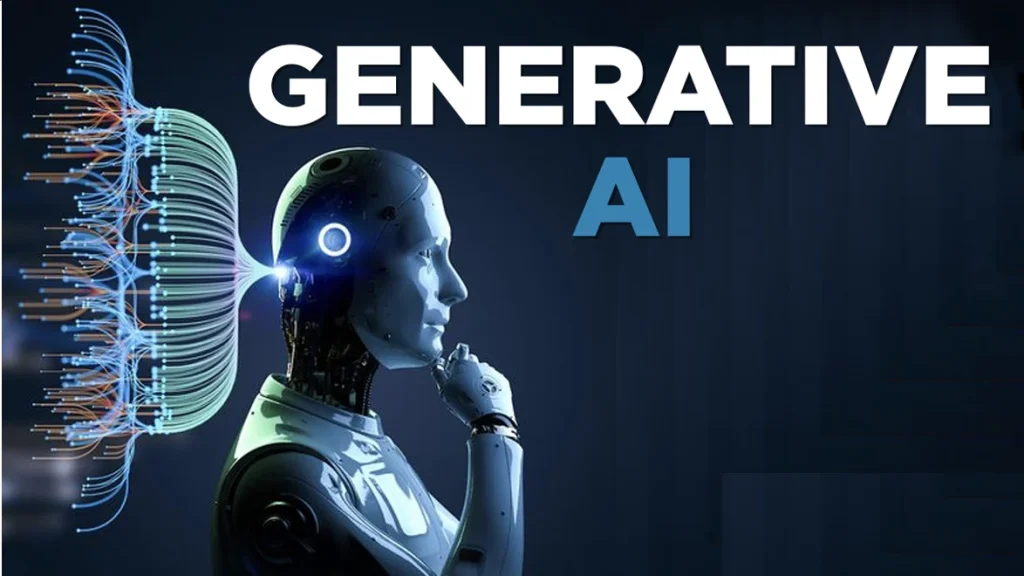
What Is Generative AI?
Generative AI is a branch of Artificial Intelligence that creates new content by learning patterns from existing data. Unlike traditional AI, which mainly classifies, predicts, or analyzes information, Generative AI produces original outputs such as text, images, videos, audio, software code, reports, and even 3D designs.
It works using advanced deep learning models trained on massive datasets. These models understand relationships within the data and generate completely new content that closely resembles human-created work.
Examples include:
- AI writing assistants
- AI image generators
- AI coding assistants
- AI music generators
- AI video creation tools
- AI design software
- AI-powered customer support systems
Instead of simply retrieving information, Generative AI creates something new based on user instructions.
What Is the Main Goal of Generative AI?
The main goal of Generative AI is to generate new, useful, and human-like content that helps people complete tasks faster, improve creativity, automate repetitive work, and make better decisions.
Simply put,
The primary objective of Generative AI is to create original content that solves real-world problems while enhancing human productivity and innovation.
Unlike conventional AI systems that only recognize patterns or make predictions, Generative AI creates new outputs using learned knowledge.
Its core objectives include:
- Creating high-quality content
- Improving creativity
- Saving time
- Automating repetitive work
- Supporting human decision-making
- Increasing business productivity
- Enhancing customer experience
- Making technology more accessible
This is why businesses across healthcare, manufacturing, education, finance, eCommerce, transportation, and smart city projects are rapidly adopting Generative AI.
Why Does the Main Goal of Generative AI Matter?
Understanding what is main goal of generative ai is important because AI is no longer limited to research labs. It is becoming a daily productivity tool for businesses and individuals.
The significance of Generative AI lies in its ability to help people achieve more in less time while maintaining quality and accuracy.
Some major reasons include:
- Faster innovation
- Reduced operational costs
- Better customer engagement
- Personalized user experiences
- Improved business efficiency
- Enhanced creativity
- Intelligent automation
Organizations that understand the true purpose of Generative AI are better prepared to adopt AI-driven digital transformation strategies.
Traditional AI vs Generative AI
Many people confuse traditional AI with Generative AI. Although both belong to Artificial Intelligence, their objectives are different.
| Traditional AI | Generative AI |
|---|---|
| Analyzes data | Creates new content |
| Detects patterns | Generates original outputs |
| Makes predictions | Produces text, images, videos, and code |
| Classification | Content creation |
| Decision support | Creativity support |
| Automation | Intelligent generation |
Traditional AI answers questions like:
- Is this image a car?
- Will this customer buy a product?
- Is this email spam?
Generative AI answers questions like:
- Write an article.
- Design a logo.
- Generate a product description.
- Create software code.
- Produce marketing content.
This creative capability is what makes Generative AI unique.
How Does Generative AI Work?
Generative AI uses deep learning algorithms trained on enormous datasets containing books, articles, websites, images, videos, programming code, and many other types of information.
The process generally involves these steps:
1. Data Collection
Large datasets are gathered from multiple sources to train AI models.
2. Model Training
The AI studies patterns, language, structures, relationships, and context.
3. Learning
Instead of memorizing information, AI learns how different elements relate to one another.
4. Prompt Understanding
When a user enters a prompt, the AI interprets the request and understands the required context.
5. Content Generation
The AI creates new content that matches the user’s instructions while maintaining coherence and relevance.
Modern AI models continuously improve through feedback and additional training.
Key Objectives Behind Generative AI
Understanding What Is the Main Goal of Generative AI becomes easier when we examine its core objectives.
1. Increase Human Productivity
One of the biggest goals is helping people complete work faster.
Examples include:
- Writing reports
- Drafting emails
- Creating presentations
- Generating software code
- Preparing marketing content
Instead of replacing humans, AI assists them by reducing repetitive tasks.
2. Enhance Creativity
Creativity often requires brainstorming and experimentation. Generative AI accelerates this process by suggesting ideas, generating drafts, creating visuals, and exploring multiple design possibilities within minutes.
Content creators, designers, marketers, developers, and educators all benefit from this creative assistance, allowing them to focus more on strategy and refinement.
3. Automate Repetitive Tasks
Businesses spend thousands of hours performing repetitive activities every year.
Generative AI helps automate tasks such as:
- Documentation
- Customer support replies
- Content creation
- Product descriptions
- Social media captions
- Technical reports
- Data summaries
Automation improves efficiency while reducing manual effort and operational costs.
4. Improve Decision-Making
AI can quickly analyze large volumes of information and generate meaningful insights, summaries, and recommendations.
For businesses, this means:
- Faster reporting
- Better planning
- Smarter forecasting
- Improved operational efficiency
Organizations can make informed decisions based on AI-generated analyses combined with human expertise.
5. Personalize User Experiences
Generative AI enables highly personalized interactions by adapting content to individual users.
Examples include:
- Personalized learning materials
- Customized shopping recommendations
- AI-powered chat support
- Tailored marketing campaigns
- Dynamic website content
Personalization enhances user satisfaction and strengthens customer relationships.
6. Accelerate Innovation
Generative AI shortens the time needed to move from an idea to a working solution.
Engineers, researchers, product designers, and developers can use AI to prototype concepts, explore alternatives, and solve complex problems more efficiently.
This capability is driving innovation across industries such as healthcare, manufacturing, transportation, and smart city infrastructure.
Real-World Applications of Generative AI
After understanding What Is the Main Goal of Generative AI, the next step is exploring where this technology is making a real impact. Generative AI is no longer limited to research labs or technology companies. Today, businesses across healthcare, manufacturing, education, banking, retail, transportation, and government sectors are using AI to improve productivity, reduce costs, and deliver better customer experiences.
By automating creative and repetitive tasks, Generative AI allows professionals to focus on innovation, strategic planning, and problem-solving instead of spending hours on manual work.
How Businesses Are Using Generative AI
Generative AI is becoming a valuable business tool because it saves time while improving the quality of work. Companies use AI to generate reports, marketing content, customer support responses, product descriptions, software code, and technical documentation.
Some common business applications include:
- Content writing and copywriting
- Customer service chatbots
- AI-powered email generation
- Marketing campaign creation
- Product recommendation systems
- Software development assistance
- Business report generation
- Data summarization
- Knowledge management
- Training material creation
Instead of replacing employees, Generative AI helps teams complete more work in less time with greater consistency.
Generative AI in Manufacturing
Manufacturing companies are increasingly integrating Artificial Intelligence into their operations. While traditional AI focuses on predictive maintenance and quality inspection, Generative AI supports planning, documentation, process optimization, and intelligent decision-making.
Manufacturers use AI for:
- Production planning
- Equipment documentation
- Maintenance guides
- Factory workflow optimization
- Technical report generation
- Safety procedure documentation
- Employee training manuals
By reducing manual documentation and improving operational efficiency, Generative AI helps manufacturing companies stay competitive in a rapidly evolving market.
Generative AI in Smart Cities
Smart cities rely heavily on Artificial Intelligence to manage traffic, improve public safety, monitor infrastructure, and optimize resource usage. Generative AI adds another layer of intelligence by creating real-time reports, summarizing traffic insights, generating alerts, and supporting decision-making for city administrators.
Possible applications include:
- Traffic analysis reports
- Incident summaries
- Smart surveillance insights
- Automated infrastructure documentation
- Public safety notifications
- Citizen information systems
As urban populations continue to grow, Generative AI will become an important technology for building safer and more efficient cities.
Generative AI in Transportation and Traffic Management
Transportation systems generate enormous amounts of data every day. AI can analyze this information and create meaningful reports for traffic authorities, logistics companies, and infrastructure planners.
Generative AI supports:
- Traffic flow analysis
- Incident reporting
- Vehicle monitoring summaries
- Logistics planning
- Driver assistance documentation
- Fleet performance reports
When combined with Computer Vision, ANPR (Automatic Number Plate Recognition), radar systems, and intelligent traffic management technologies, AI enables faster decision-making and more efficient transportation networks.
How Kotai Electronics Uses AI Technologies
Kotai Electronics is recognized for developing AI-powered solutions for Smart Cities, Industrial Automation, Traffic Management, Computer Vision, and Defence applications. While many of its existing solutions rely on Artificial Intelligence, Machine Learning, and Computer Vision, the future integration of Generative AI can further enhance these intelligent systems.
Some of the company’s AI-driven solutions include:
- Intelligent Traffic Management Systems (ITMS)
- ANPR (Automatic Number Plate Recognition)
- Radar-Based Speed Violation Detection
- AI Video Analytics
- Industrial Automation
- Smart Surveillance Solutions
- Railway Safety Systems
- IoT-Based Monitoring
- Visual AI Solutions
Generative AI can complement these technologies by automatically creating incident reports, generating maintenance documentation, summarizing surveillance data, and assisting operators with intelligent recommendations. This combination of predictive AI and generative capabilities can significantly improve operational efficiency across smart infrastructure projects.
Generative AI in Computer Vision
Computer Vision enables machines to understand images and videos. Generative AI enhances these systems by creating useful outputs from visual information rather than only detecting objects.
Examples include:
- Automatic inspection reports
- Visual damage summaries
- AI-generated surveillance descriptions
- Manufacturing defect documentation
- Smart monitoring reports
- Image enhancement suggestions
For organizations working with advanced Computer Vision systems, Generative AI adds value by converting complex visual data into actionable insights.
Generative AI in Healthcare
Healthcare professionals spend a significant amount of time preparing reports, documenting patient information, and managing medical records. Generative AI helps automate many of these administrative tasks, allowing doctors and healthcare staff to focus more on patient care.
Applications include:
- Clinical documentation
- Medical report generation
- Patient summaries
- Research assistance
- Healthcare chatbot responses
- Personalized treatment information
It is important to note that AI should support healthcare professionals, not replace medical expertise or clinical judgment.
Generative AI in Education
Education has become more personalized with the adoption of Artificial Intelligence. Teachers, students, and educational institutions are using Generative AI to create learning materials and improve knowledge delivery.
Common uses include:
- Lesson planning
- Study notes
- Practice questions
- Quiz generation
- Personalized learning content
- Assignment assistance
- Language learning support
Students receive customized educational resources while teachers save time on content preparation and assessment design.
Generative AI in Software Development
Software developers use Generative AI to speed up coding, debugging, testing, and documentation. AI-assisted development improves productivity without replacing the creativity and expertise of software engineers.
Generative AI supports developers by:
- Writing code snippets
- Explaining programming concepts
- Detecting coding errors
- Generating documentation
- Creating test cases
- Optimizing existing code
This allows development teams to build applications more efficiently while maintaining quality standards.
Generative AI in Marketing
Marketing teams are among the biggest users of Generative AI because content creation is one of the most time-consuming aspects of digital marketing.
AI helps marketers create:
- Blog articles
- SEO content
- Social media posts
- Email campaigns
- Advertisement copy
- Product descriptions
- Landing page content
- Video scripts
However, successful marketing still requires human creativity, brand understanding, and strategic planning to ensure authenticity and relevance.
Benefits of Generative AI for Businesses
Understanding What Is the Main Goal of Generative AI also means recognizing the practical benefits it offers to organizations. Businesses that adopt AI responsibly can improve efficiency, reduce repetitive work, and deliver better customer experiences.
Some of the biggest advantages include:
Increased Productivity
Employees spend less time on repetitive tasks and more time solving important business problems.
Cost Reduction
Automation reduces operational expenses by minimizing manual effort and improving workflow efficiency.
Faster Content Creation
Reports, presentations, product descriptions, emails, and marketing materials can be generated much more quickly.
Better Customer Experience
AI-powered assistants provide faster responses, personalized recommendations, and 24/7 customer support.
Improved Decision-Making
Generative AI creates summaries, insights, and recommendations that help managers make informed decisions based on available data.
Innovation and Creativity
AI acts as a creative partner by generating ideas, designs, and content that inspire new products, services, and business strategies.
Challenges of Generative AI
While the main goal of generative ai is to improve productivity and creativity, organizations should also understand its limitations. Responsible use of AI is essential to ensure accuracy, security, and ethical decision-making.
Some common challenges include:
- AI-generated content may contain factual errors.
- Responses can reflect biases present in training data.
- Sensitive business information should not be shared with unsecured AI systems.
- Human review is necessary before publishing AI-generated content.
- Copyright and intellectual property concerns must be considered.
- AI should complement human expertise, not replace it entirely.
Businesses that combine AI capabilities with human oversight achieve the best long-term results.
Best Practices for Using Generative AI
To maximize the benefits of Generative AI, organizations should follow these best practices:
- Use AI as a productivity assistant rather than a replacement for skilled professionals.
- Verify important facts before publishing or making business decisions.
- Protect confidential and sensitive data.
- Train employees on responsible AI usage.
- Combine AI-generated outputs with human creativity and expertise.
- Continuously monitor AI performance and improve workflows.
By adopting these practices, businesses can safely integrate AI into their daily operations and unlock greater efficiency.
Future Goals of AI
As Artificial Intelligence continues to evolve, its capabilities will extend far beyond generating text, images, or code. While today’s AI tools mainly assist humans, the future goals of AI focus on building systems that can collaborate with people more effectively, solve complex problems, and support decision-making across industries.
The future of AI is not about replacing human intelligence. Instead, it is about creating intelligent assistants that enhance productivity, improve creativity, and make technology more accessible. Businesses that embrace AI responsibly will be better positioned to innovate, reduce costs, and deliver superior customer experiences.
Some of the major future goals of AI include:
- Developing more accurate and reliable AI models
- Creating highly personalized user experiences
- Enhancing collaboration between humans and AI
- Improving autonomous systems and robotics
- Supporting scientific research and innovation
- Advancing healthcare diagnostics and treatment planning
- Optimizing industrial automation and manufacturing
- Building smarter transportation and smart city solutions
- Strengthening cybersecurity and fraud detection
- Promoting ethical, transparent, and responsible AI development
As these technologies mature, AI will become an essential partner in everyday work rather than just a software tool.
Will Generative AI Replace Human Jobs?
One of the most common concerns surrounding AI is whether it will replace human workers. The reality is more balanced. Generative AI is designed to automate repetitive, time-consuming tasks, allowing professionals to focus on strategic thinking, creativity, and problem-solving.
For example:
- Writers can use AI to draft articles faster.
- Developers can generate code snippets and debug software more efficiently.
- Designers can create multiple concepts in minutes.
- Customer support teams can automate routine responses.
- Engineers can quickly prepare technical documentation.
However, AI still lacks human qualities such as emotional intelligence, ethical judgment, critical thinking, and domain-specific expertise. Businesses achieve the best results when AI complements skilled professionals rather than replacing them.
The Role of Generative AI in Smart Industries
Industries worldwide are embracing AI to improve operations and remain competitive. Organizations involved in smart infrastructure, manufacturing, transportation, and public safety are increasingly integrating AI-driven technologies into their workflows.
For companies like Kotai Electronics, which specialize in Artificial Intelligence, Computer Vision, Industrial Automation, Smart Traffic Systems, ANPR, Radar-Based Monitoring, and IoT solutions, Generative AI offers additional opportunities to streamline operations.
Potential applications include:
- Automated incident report generation
- AI-assisted maintenance documentation
- Intelligent traffic analytics summaries
- Predictive maintenance recommendations
- Smart surveillance report generation
- AI-powered knowledge management
- Technical documentation automation
- Decision-support systems for operators
When combined with existing AI and Computer Vision technologies, Generative AI can help organizations make faster, more informed decisions while improving operational efficiency.
Common Myths About Generative AI
Many misconceptions exist about AI. Understanding the facts helps businesses adopt the technology more effectively.
1: Generative AI Knows Everything
Reality: AI generates responses based on patterns learned during training. It can make mistakes or provide outdated information, so important outputs should always be reviewed.
2: AI Will Replace Every Job
Reality: AI automates certain tasks, but human expertise remains essential for creativity, leadership, ethics, and complex decision-making.
3: Generative AI Is Only for Large Companies
Reality: Businesses of all sizes, including startups and small enterprises, can use AI for content creation, customer support, marketing, and productivity.
4: AI Always Produces Perfect Results
Reality: AI-generated content often requires editing, fact-checking, and human refinement to ensure accuracy and quality.
5: AI Is Too Difficult to Use
Reality: Modern AI tools are designed with user-friendly interfaces, making them accessible even to people with limited technical knowledge.
Best Practices for Implementing Generative AI
To maximize the benefits of AI, organizations should follow responsible implementation strategies:
- Define clear business objectives before adopting AI.
- Use AI to enhance human productivity, not replace human expertise.
- Regularly review AI-generated outputs for accuracy.
- Protect sensitive business and customer data.
- Train employees to use AI responsibly.
- Continuously monitor AI performance and update workflows as technology evolves.
A balanced approach ensures that AI delivers long-term value while maintaining trust and reliability.
Conclusion
The answer to What Is the Main Goal of Generative AI is straightforward: its purpose is to generate original, meaningful content that enhances human capabilities, boosts productivity, and drives innovation. Rather than replacing people, Generative AI empowers professionals by automating repetitive tasks, supporting creativity, and enabling faster, data-driven decision-making.
From content creation and software development to healthcare, manufacturing, smart cities, and industrial automation, Generative AI is reshaping industries across the globe. Organizations that combine AI with human expertise will be better equipped to adapt to changing market demands and unlock new opportunities.
For technology companies like Kotai Electronics, which already deliver advanced AI, Computer Vision, IoT, Smart Traffic Management, and Industrial Automation solutions, the integration of Generative AI represents the next phase of intelligent innovation. By embracing AI responsibly, businesses can build smarter systems, improve operational efficiency, and create greater value for customers.